 SAME DAY DISPATCH; ORDER BY 2PM
 SECURE PAYMENT
  4.8/5 RATING
Baking with xylitol: how to swap it for sugar
Swapping sugar for xylitol starts with the simplest move there is: weigh out the same amount the recipe asks for and change nothing else. That 1:1 ratio works by weight rather than by the spoon, and it carries most first bakes through. Colour, crumb and rise are another matter, because xylitol is not a sugar but a sugar alcohol. Biscuits brown less, cakes stay softer for longer, and yeast dough will not rise on xylitol alone. Knowing what xylitol is not explains all three, so it is worth ten minutes before the oven goes on!
Key takeaways:
- Start at 1:1 by weight: match the sugar in grams, then adjust after a test bake.
- Expect a paler bake: xylitol melts, but it does not caramelise the way sugar does.
- Yeast gets nothing from it: dough needs another fermentable sugar to rise.
- Dissolve it properly: undissolved crystals feel gritty and taste cool.
- Erythritol is not a twin: it is less sweet and melts far higher.
What is xylitol and where does it come from?
Xylitol is a sugar alcohol: a crystalline sweetener that tastes close to sucrose and behaves nothing like it once heated. It occurs naturally in fruit and vegetables, and on a commercial scale it is produced from plant fibre. The pack described below gives birch as the source, and that origin is why the sweetener is also sold as birch sugar.
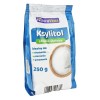
Reading the label answers most of the questions a first bake raises. Xylitol 250g from NaturaVena lists one ingredient, xylitol 100%, and is produced in Poland; per 100 g it states 99.8 g of carbohydrate, of which 0.2 g sugars, and 240 kcal. The manufacturer names sweetening drinks, baking and cooking as the intended uses, so a recipe is exactly where it is meant to end up. You will find it in the xylitol section at 4ecoshop, next to the rest of the sweeteners.
How much xylitol replaces sugar in a recipe?
The xylitol ratio to start from is one to one by weight: 100 g of sugar becomes 100 g of xylitol, and the rest of the recipe stays as written. The two are close enough in sweetness for the batter to taste right at the first attempt. Work with scales rather than spoons, since crystal size differs between packs and a level spoonful of one is not a level spoonful of the other.
Treat that ratio as a starting point. Trials on cakes have found no meaningful difference in quality at 1:1, yet aeration, spread and crumb still depend on what else sits in the bowl. Bake the recipe once as written, taste it cold, then adjust by 10 g at a time on the next round.
How does xylitol behave in the oven?
Xylitol melts between 92 and 96°C, and melting is where the similarity to sugar ends. Sugar browns because it caramelises and reacts with the proteins around it; a sugar alcohol does not take part in those reactions in the same way, so colour builds slowly and stays light. Expect a paler crust and a paler crumb, and stop judging by colour: the timer and a skewer tell you far more than the top of the cake.
The whole xylitol vs sugar question comes down to that one difference. Caramel, toffee and a dark glossy top are the jobs xylitol cannot take over, because they are caramelisation itself. Browning is reduced rather than absent. A long bake at a higher temperature will still take on some colour, just later than the recipe suggests.
Which bakes work with xylitol and which do not?
Anything that relies on sweetness rather than on caramelisation takes the swap without complaint. Sponges, muffins, shortbread, crumbles, baked cheesecakes and fruit fillings all work at 1:1, and what you notice afterwards is the colour rather than the taste.
Two groups decide how the swap ends:
- Bakes that work: sponges, muffins and crumbles need sweetness and moisture, and xylitol supplies both.
- Bakes that change: biscuits spread a little less and stay pale, so they look underdone long before they are.
- Bakes that do not: caramel, toffee and praline are caramelisation from start to finish, and there is nothing here to replace it with.
- Doughs that need feeding: anything raised by yeast needs a sugar the yeast can actually use.
Flour choice does not change that arithmetic. Wholemeal wheat, rye and einkorn from the whole grain flour we keep at 4ecoshop take xylitol exactly as white flour does: the flour decides the crumb, the sweetener decides the colour.
Why will yeast dough not rise on xylitol?
Baker's yeast cannot metabolise xylitol, so a dough sweetened with it alone gets no carbon dioxide out of the sweetener and stays flat. Yeast feeds on glucose and sucrose first, then on the maltose released from starch in the flour, and none of that arrives with a sugar alcohol.
The fix is small. Leave a teaspoon or two of ordinary sugar or honey in the dough for the yeast to work on, and let xylitol carry the sweetness. A bread dough with no added sugar at all will still rise on the flour's own maltose, only more slowly than the recipe expects. Where the lift comes from baking powder or bicarbonate, none of this applies at all.
How does xylitol behave in no-bake desserts?
In a cold dessert xylitol only sweetens, and the setting is left to whatever gels the mixture. It dissolves readily in warm liquid, so panna cotta, mousses, fruit jellies and no-bake cheesecakes take it with no change to the method. Dissolving draws a little heat from its surroundings, which is why a spoonful straight from the pack tastes cool on the tongue.
Give it time to dissolve fully, because crystals left in a cold cream stay gritty and never soften. When the dessert also has to suit a plant-based diet, start from the vegan products and treat the sweetener as the last decision rather than the first.
How should xylitol be measured and stored?
Weigh it. Volume measures drift with crystal size, and a recipe leaning on 1:1 only holds when both sides of the swap are weighed on the same scales.
Four habits keep a pack in working order:
- Scales over spoons: weigh the sugar you are replacing and the xylitol going in, not one of the two.
- Dry and cool: the label asks for a dry, cool place away from sunlight, which rules out the shelf above the hob.
- Airtight after opening: xylitol draws moisture from the air and clumps, and clumps are awkward to weigh.
- Label first: composition and packaging can change, so read what is printed on the pack in front of you.
Clumping is not spoilage. Break the lumps up, weigh as normal, and keep the pack closed between bakes so the crystals stay loose enough to dissolve at the speed the recipe assumes.
Swapping sugar for xylitol without ruining the bake
Pick a recipe you have already baked with sugar, so there is something to compare the result against. Weigh the xylitol to the same figure, mix and bake as usual, and take the tin out on time rather than on colour. Judge it once it is cool, since a xylitol crumb firms up differently over the first hour.
If it tastes flat, add 10 g on the next attempt. If the top stayed paler than the occasion needs, brush it with milk or egg before it goes in and let the protein do the browning the sweetener no longer does. Keep caramel, toffee and yeast doughs on sugar, and let xylitol take the rest of the tin.
Frequently asked questions about xylitol
Does xylitol taste like sugar?
Xylitol tastes very close to sugar, which is why a swap by weight works on flavour alone. The difference is a cooling sensation as the crystals dissolve, clearest raw or in a cold dessert and barely there in a baked cake.
Can xylitol be used in bread?
A xylitol loaf bakes up paler than a sugar one, so judge doneness by the hollow sound when you tap the base and by a set crumb, not by crust colour. The yeast still needs its usual pinch of sugar or honey to rise, as covered above.
Why do xylitol bakes stay moist longer?
Xylitol holds on to water, so the crumb dries out more slowly than in the same recipe made with sugar. A four-month laboratory model of cake texture found less hardening, although not every recipe behaves that way.
Is xylitol safe for pets?
Xylitol is toxic to dogs, so the pack and anything baked with it belong out of their reach. If a dog eats any, contact a vet urgently rather than waiting for symptoms.
Can xylitol be swapped one for one with erythritol?
Erythritol is not a straight stand-in: it is only 60–80% as sweet as sucrose, so the same weight leaves a bake tasting flatter. It also melts at 119–123°C, which changes how it behaves in a warm mixture. Recalculate for sweetness first, then bake a small batch before committing a whole tin.