


 SAME DAY DISPATCH; ORDER BY 2PM
 SECURE PAYMENT
  4.8/5 RATING
* Intense currant flavor
* Natural acidity of the fruit
* Easy dosage

* Intense strawberry flavor
* Smooth, liquid texture
* Easy dosage

- Bestseller
* Soothes throat
* Reduces irritation of mucous membranes
* Rich in vitamin C
* Great for drinks
* Supports immunity
- Bestseller
* Vegan and organic product
* Great for desserts
* Perfect for cold days
- Bestseller
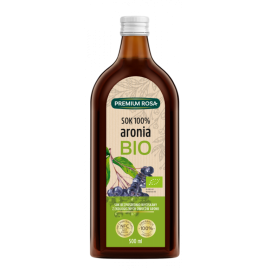
Chockeberry and its properties cannot be overestimated, it delays the aging process, strengthens immunity .
- Bestseller
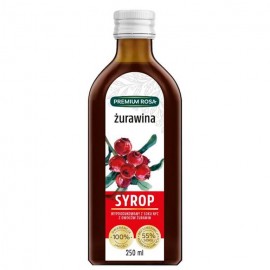
Cranberry syrup (without the addition of citric acid), made from carefully selected raw materials, which it has an unusual flavor and aroma.Syrup cranberry's Premium Rosa is a product 100% natural. It is obtained after squeezing the fruit cranberry. I
Natural Fruit and Herbal Syrups
A small bottle is the easiest way to test a flavour you have never cooked with. We keep fruit pressings, flower infusions and extracts from tree shoots. Natural syrups are concentrates for tea, water, pancakes and porridge, not drinks to pour straight into a glass. Below you will find what goes into these bottles, how they taste, what to pour them over and which sizes they come in!
What is a natural syrup made of?
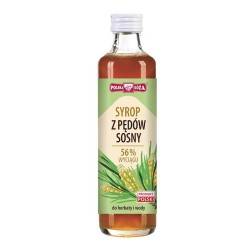
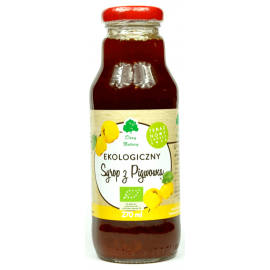
Three ingredients usually cover the whole label: juice or plant extract, sugar, and sometimes a little citric acid. The Dary Natury quince bottle lists water, quince fruit at 16.7% and cane sugar, and the fruit and the sugar are both organic. The pine syrup is built on 56% shoot extract and sugar.
Natural syrups differ most in that one number. A 16.7% fruit share and a 56% extract behave nothing alike once you dilute them. Sugar sits in each of these recipes, so even an organic fruit syrup here is a sweetened preserve rather than a no-added-sugar product. The BIO mark appears with the product name in the catalogue, so you can tell which syrups carry organic certification and which are plain fruit preserves.
Fruit syrups: raspberry, cherry and blackcurrant
Blackcurrant from Krokus starts as 55% NFC juice, and the taste comes out deep and lightly tart. It pours thin enough to dose drop by drop, which suits tea, lemonade, yoghurt and pancake batter. The same jars also hold strawberry and blueberry.
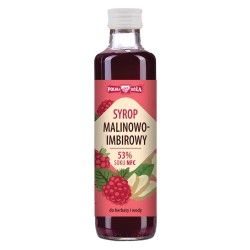
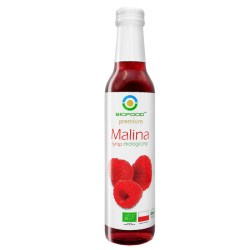
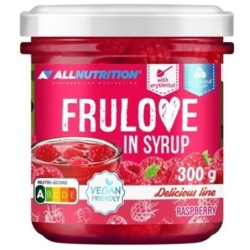
Raspberry syrup comes in three shapes here: an organic Bio Food bottle, Frulove in Syrup from Allnutrition and a version with ginger. Bioone takes cherry in a different direction, with cinnamon and cloves, and does an orange one with ginger. The Frulove name turns up again on our healthy jams shelf, among reduced-sugar preserves and fruit purées.
Quince, pine and rosehip: the less obvious syrups
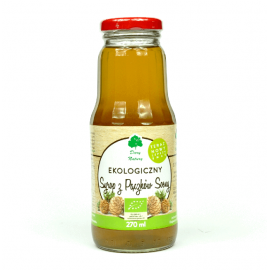
Raw quince is hard and sharply sour, which is why it usually reaches the kitchen already cooked down. Quince syrup from Dary Natury is exactly that, sold in a 270 ml bottle. Pine syrup appears twice, once pressed from shoots and once from buds. The shoot version is thick, amber and mildly resinous, with honey underneath.
Mir-Lek bottles an elderflower syrup made from the flower, not the berry, whatever the English name on the front suggests. Rosehip syrup means a pairing rather than a bottle of its own, since two Apotheke syrups for children carry it with thyme or ribwort plantain. A syrup has to be measured out and diluted first, while a bottle from our healthy juices shelf is opened and poured as it comes, whether that is fermented cabbage, cucumber and beetroot or an NFC pressing of ginger or chokeberry.
How do you use syrup in drinks and desserts?
A syrup goes into hot tea, cold water, desserts and batter, and a single spoonful is the working measure for a whole serving. The same spoonful tastes different hot and cold, so try one syrup both ways before you decide where it belongs. In desserts a natural syrup for drinks doubles as a topping for pancakes, yoghurt, porridge or sponge cake. Baking and smoothies show up on the labels too.
A syrup dissolves the moment it meets water, whatever the temperature. Honey behaves differently in a cold glass, and our honey shelf keeps organic lime, acacia, honeydew and multiflower jars, plus a coriander one from Alce Nero.
Bottle sizes and how long syrup keeps
Elderflower comes in 200 ml, pine, raspberry and cranberry in 250 ml, quince and pine buds in 270 ml, and Krokus in a 355 g jar that holds 280 ml. Once a bottle is open, keep it in the fridge – every card on this shelf says the same. Dosing by the spoon stretches even the smallest format far beyond what the number on the label suggests. Check the raw material share on two labels before you decide: the quince bottle gives 16.7% fruit, the pine shoot syrup 56% extract.