


 SAME DAY DISPATCH; ORDER BY 2PM
 SECURE PAYMENT
  4.8/5 RATING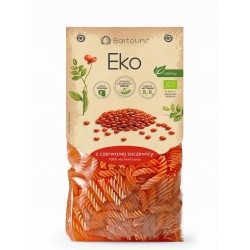
- Bestseller
- V
- O
* High protein content.
* Rich in fiber.
* Easy to prepare.
- Out-of-Stock
- Bestseller
- V
- GF
- SF
High-Protein Pasta From Pulses
A first pan of pulse pasta is easy to lose by giving it the same time as a wheat shape, and it turns soft in the middle and breaks at the edges. At 4ecoshop, pulse pasta is a category in its own right, not a subset of the gluten-free shelf. The high protein pasta here comes as fusilli, penne, tube, spaghetti and fettuccine, milled from red lentils, chickpeas, green peas, black beans, soya and adzuki. Read on for the cooking times, the flavour and the colour that ends up on the plate!
What is high-protein pasta made from?
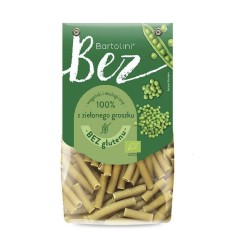
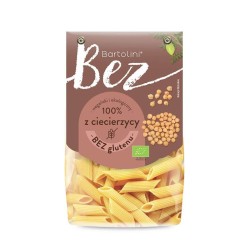
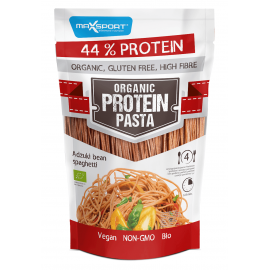
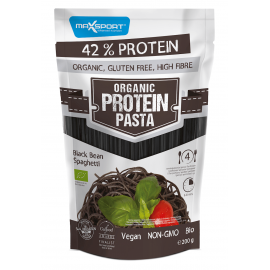
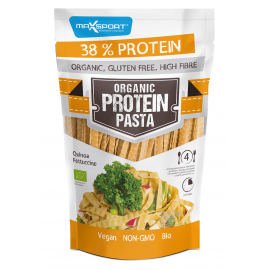
The flour is milled from pulses and nothing else, so the pulse itself is the whole source of the protein. Bartolini works with red lentils, chickpeas and green peas. MaxSport works with black beans, soya, adzuki and quinoa. Per 100 g the black bean spaghetti carries 42 g of protein, the red lentil fusilli 26 g and the chickpea penne 21.2 g.
Every pasta on this shelf is milled from a single pulse, with no cereal flour blended in. Fibre follows the same order: 19 g per 100 g in the black bean spaghetti, 9.9 g in the chickpea penne and 5.8 g in the red lentil fusilli.
How do you cook lentil and chickpea pasta?
Cook pulse pasta for less time than a wheat one and taste a piece before the timer ends. Bartolini gives the red lentil fusilli 5–8 minutes, in 1 litre of salted water for every 100 g of pasta. MaxSport gives the black bean spaghetti 6–8 minutes in boiling water, then straight into the colander.
Lentil pasta softens quickly once it passes that window, and the minute after the window is the minute most first attempts lose. Chickpea pasta behaves in much the same way, only with a firmer bite at the start. Set a timer for the shorter time printed on the pack and lift a piece out before it runs down.
What does pulse pasta taste like?
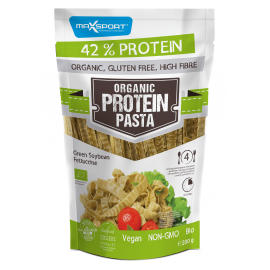
Pulse pasta tastes of the pulse it was milled from, because nothing else sits in the flour. The pulse gives high protein pasta a fuller, more savoury flavour than a wheat shape. The result holds up next to a simple tomato or garlic sauce. Colour arrives even earlier: the red lentil fusilli is warm orange, the black bean spaghetti almost black, and the green soybean fettuccine green on the plate.
The gluten-free marking belongs to the individual pack, not to the category. Some of these pastas carry Gluten-Free in the product name, while the red lentil fusilli from Bartolini states that it may contain cereals containing gluten and eggs. For a milder plate that reads closer to wheat, our gluten-free pasta is milled mostly from cereals, and the pasta there does not come through the sauce.
Protein pasta shapes: fusilli, penne and spaghetti
The shape follows the pulse. Red lentil comes as fusilli, chickpea as penne and green pea as a short tube. Black beans and the soya and adzuki blend come as spaghetti, and both green soya pastas as fettuccine. Bartolini packs 250 g, MaxSport 200 g. Choosing between the two gluten-free shelves comes down to how much of the raw material you want to taste: a pulse shape carries a pronounced flavour of its own, a cereal one stays neutral.
Wheat shapes in whole grain are a separate shelf. Our wholemeal pasta is built on whole cereal grains such as spelt, emmer and rye, and it also holds one pulse shape of its own, a broad bean fusilli from Bartolini.
Pasta for low-carb and keto meals
Pulse pasta is still a carbohydrate food and the labels say so plainly: 39.5 g of carbohydrate per 100 g in the black bean spaghetti, 51.6 g in the chickpea penne and 56 g in the red lentil fusilli. A strict low-carb or keto plate is a different job, and for that we keep a separate shelf of konjac pasta. You reach for this category for a different reason: the protein and the fibre sit in the pasta itself, one pulse per pack, with the Bartolini shapes milled in Poland.