


 SAME DAY DISPATCH; ORDER BY 2PM
 SECURE PAYMENT
  4.8/5 RATING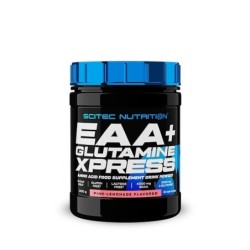



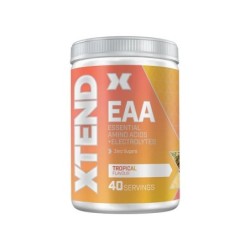
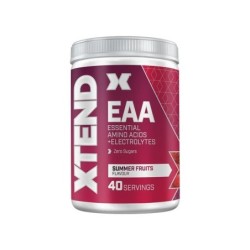
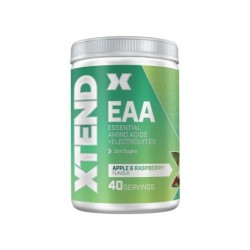
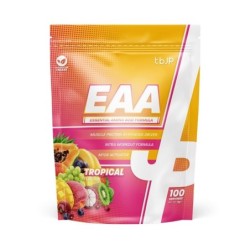
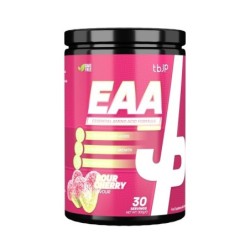
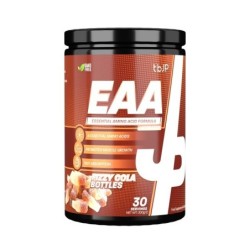
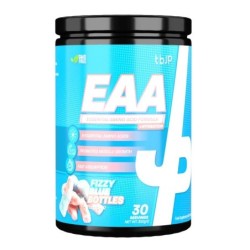
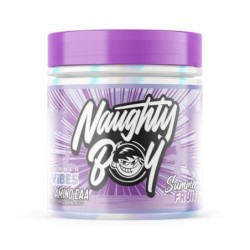
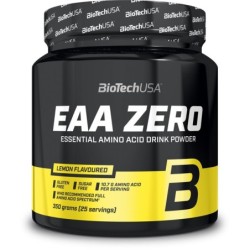
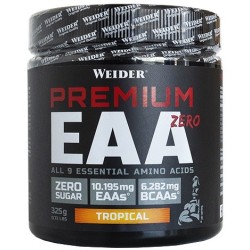
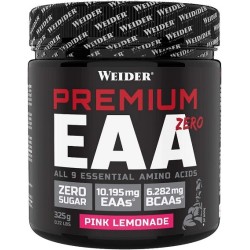
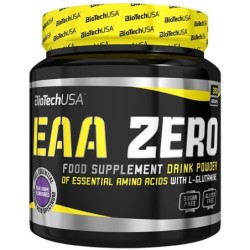
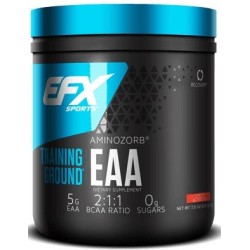
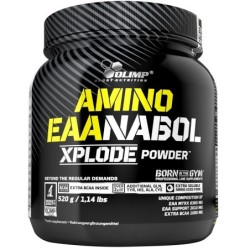
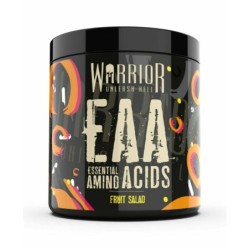
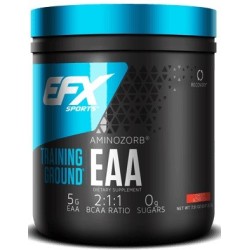
EAA Supplements: Amino Acids for Training
EAA supplements in our range cover the full set of nine essential amino acids, while BCAA formulas carry only three of them. Some blends add glutamine, others declare electrolytes in milligrams per serving. The sections below go through the panels entry by entry and through the way a serving is prepared!
What are essential amino acids?
Essential amino acids are the nine that the body does not produce itself. On a label they run as leucine, isoleucine, valine, lysine, threonine, phenylalanine, methionine, histidine and tryptophan. The amounts behind those names differ from one amino acid supplement to the next.
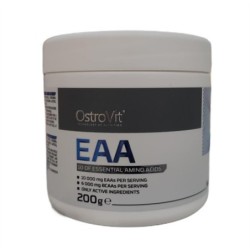
OstroVit prints its figures per 100 g of unflavoured powder. Leucine leads at 30,000 mg, ahead of isoleucine and valine at 15,000 mg each, and the rest run down from 13,500 mg for lysine HCl to 1,000 mg for tryptophan. Arginine appears there too, at 4,000 mg, so that panel runs to ten entries rather than nine.
EAA or BCAA: what is the difference
The difference comes down to how many amino acids the formula declares. A BCAA product carries three branched-chain amino acids: leucine, isoleucine and valine. An EAA blend declares the full set of nine, and those same three are part of it. On the OstroVit panel the marking “(BCAA)” accompanies exactly those three names.
Beyond that split, the panels differ. SciTec, Xtend and Olimp Nutrition each write their own panel in our range. Some keep to the nine, some add arginine, and an EAA with glutamine gives that one its own line.
Why are EAA blends combined with electrolytes?
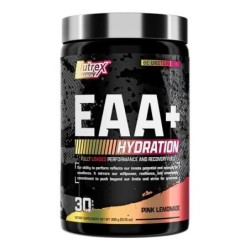
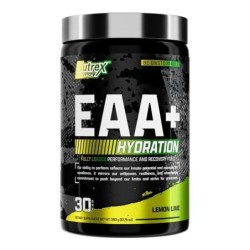
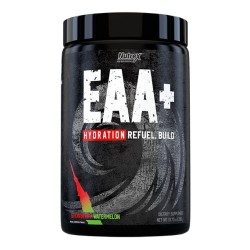
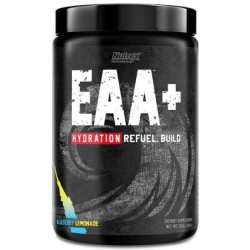
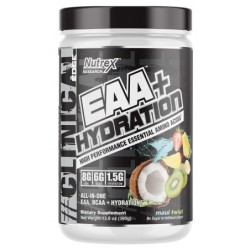
Formulas sold under the EAA + Hydration name declare a second complex beside the amino acids, with mineral amounts printed per serving. Nutrex puts 8 g of EAA complex into one serving from its 390 g tub, with leucine at 3 g and isoleucine and valine at 1.5 g each. Lysine HCl is declared at 885 mg and threonine at 520 mg. The hydration complex sits at 1.5 g, built on taurine, Calci-K and coconut water concentrate.
The electrolyte line reads sodium 90 mg, calcium 60 mg, potassium 50 mg, then phosphorus 30 mg and magnesium 20 mg. Our isotonic drinks often declare their mineral content per serving in the same way. Our team answers in English and in Polish, whether the question is about a composition panel or about an order. Decide what you want beside the amino acids themselves – glutamine, or electrolytes – before picking a flavour.
Powder or capsules: how to take EAA
Our EAA supplements come as powder you measure or capsules you count, and the form decides how a serving is prepared. The unflavoured EAA powder from OstroVit uses a 10 g serving, one and a half scoops in 150 ml of water, and the 200 g tub holds twenty of them. Its label carries a broad may-contain list: milk, soya, nuts, sesame, gluten cereals, eggs and fish. Measuring a scoop is the same routine as with our whey protein isolate.
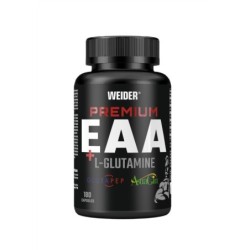
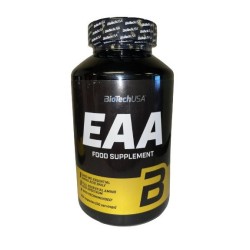
Capsules come from Weider and BioTechUSA, and they are counted rather than weighed. Weider Premium EAA + L-Glutamine works out at six capsules per serving, with 30 servings to the pack and leucine 3,000 mg plus L-glutamine 800 mg declared in that serving. The label directs six capsules a day, before or after training, and states that the product is not for anyone under 18 or for pregnant women.
EAA flavours and pack sizes
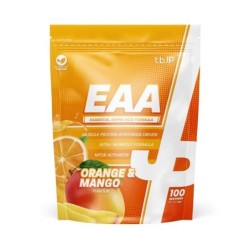
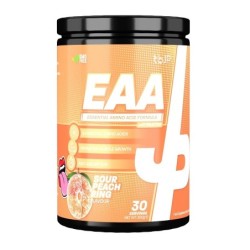
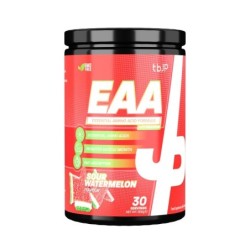
Flavour and pack weight separate one EAA drink in our range from the next: names run from Pink Lemonade and Orange & Mango to Sour Watermelon and Blue Grape. Tub weights step from 200 g and 213 g through the 296–360 g band up to 390 g, 500 g, 520 g and 1000 g.
The scoop-to-water proportion sits on the pack, so a serving is set before the first mix. Portions are read the same way in our creatine HCl range. The plain 200 g OstroVit tub carries no flavour name at all, and Nutrex writes EAA + Hydration straight into the product name.