 SAME DAY DISPATCH; ORDER BY 2PM
 SECURE PAYMENT
  4.8/5 RATING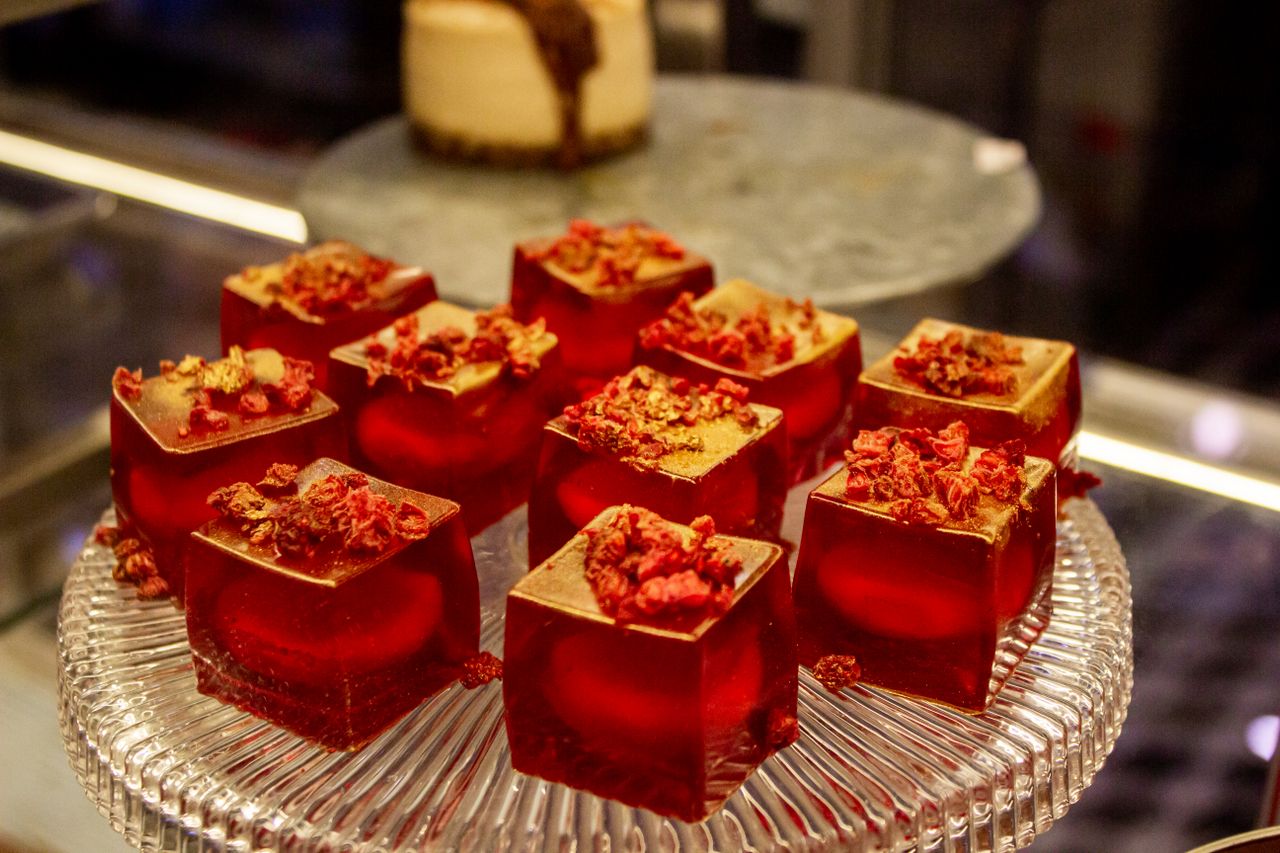
How to use agar agar instead of gelatine
Swapping gelatine for a seaweed powder is not a spoon-for-spoon exchange. A workable starting point is one teaspoon of agar agar per 240 ml of liquid, where a recipe asks for a tablespoon of powdered gelatine. Technique matters more than the measure, because the powder has to reach a full boil before it dissolves at all. The rest is timing: it sets as it cools, well before the fridge finishes the job. Get the dose and the boil right and the swap stops being a gamble!
Key takeaways:
- Start at one teaspoon per 240 ml: treat the first batch as a test, never as a fixed conversion.
- Boiling is not optional: agar will not dissolve in cold liquid or in water that is merely hot.
- Expect a clean cut: agar sets firm rather than wobbly, so delicate desserts need a lighter dose.
- Acidity is the real risk: long boiling in a very sour mixture weakens the gel, unlike fruit enzymes.
- A set dessert can be rescued: heat it back past roughly 85°C and pour it into the mould again.
What is agar agar and where does it come from?
Agar agar is a gelling polysaccharide extracted from red seaweed, listed on food labels under the additive code E406. It carries no animal protein, which is what makes it a vegan gelatine substitute rather than a lighter version of gelatine. Powder, flakes and strips are three formats of the same raw material, and they are not swappable spoon for spoon. Fine agar agar powder dissolves fastest and is the easiest format to work with when converting a familiar recipe.
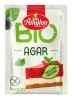
On our shelves the seaweed appears in one clearly described form: a 10 g sachet of organic agar agar from Amylon, certified organic and gluten-free. The label lists 167 kcal per 100 g, 0.4 g of carbohydrate and 1.25 g of salt, and a whole litre of jelly uses that one sachet. Read the preparation panel on your own pack before anything else, because gel strength is a brand-level property.
How much agar agar replaces gelatine?
There is no universal agar agar ratio, so the useful answer is a starting point rather than a conversion chart. Count on one teaspoon of powder per 240 ml of liquid where a recipe asks for one tablespoon of powdered gelatine. That is a heuristic and nothing more, because gel strength differs between brands and the same dose behaves differently in an acidic mixture.
The pack in front of you always beats a table found online. The Amylon sachet, for instance, is measured out as 10 g of agar to one litre of cold liquid, which gives a firm rather than rubbery set. Most agar agar vs gelatine confusion starts at exactly this point, since the two powders are nowhere near equally strong. Boil a small cup first, chill it for ten minutes and judge the texture before committing a whole dessert.
Why does agar agar need to boil?
Agar agar does not dissolve in cold water, and hot tap water will not do the job either: the mixture has to reach a full boil, above roughly 90°C. Powder that never dissolved is the most common reason a jelly stays liquid or sets in grainy patches. Once it has dissolved, the gel forms as the liquid cools to around 32–45°C, so it often begins to firm up on the worktop.
Five steps cover the whole technique:
- Disperse it cold: whisk the powder into the cold liquid before any heat reaches the pan.
- Bring it to the boil: a gentle simmer will not dissolve it, so wait for a proper rolling boil.
- Cook for three minutes: keep stirring, because agar settles and scorches on the base of the pan.
- Pour it while hot: cool the mixture slightly, then fill the mould before the gel starts to form.
- Chill until firm: the fridge finishes a set that has already begun at room temperature.
The gel melts again at roughly 85–95°C, which means a disappointing batch goes back into the pan rather than into the bin.
Which desserts set well with agar agar?
Clear jellies, layered puddings, fruit glazes and moulded desserts all suit agar, because each of them wants a clean edge. Home-made vegan jelly is nearly always set with it, and the Amylon panel allows fruit juice in place of water. Mousses and anything meant to melt on the tongue are the harder cases, since agar gives structure rather than softness.
Three kinds of dessert take agar particularly well:
- Cut jellies and terrines: the firm break is an advantage when a dessert has to hold straight sides.
- Glazes and mirror finishes: a thin agar layer stays glossy at room temperature and does not slide.
- Layered puddings: each tier sets quickly, so the next one can be poured after a short wait.
Sweetened tea, coffee or a herbal infusion sets just as reliably as juice, provided the liquid boils with the powder already in it.
Which fruits stop agar agar from setting?
Fresh pineapple, kiwi and papaya are the usual suspects, but with agar they are a false alarm. Their enzymes break down protein, and gelatine is a protein, while agar is a carbohydrate chain that those enzymes cannot touch. A pineapple jelly that collapsed on gelatine is exactly the recipe agar rescues.
The genuine risk is acidity. Below roughly pH 5.5, in the range of lemon juice, passion fruit or a sharp berry puree, prolonged boiling breaks the chains apart and the set comes out slack. Give the agar its three minutes in the water or juice base, then stir the sharpest ingredient in at the end, off the heat.
Sugar does not block agar either, whatever a recipe comment might suggest. Its concentration and the moment it goes into the pan change how firm and how brittle the finished gel feels, which is a texture question rather than a failure.
How do you use agar agar in savoury dishes?
In savoury cooking agar behaves like a setting agent that survives a warm kitchen, which gelatine does not. Clear stock turns into a sliceable aspic, vegetable terrines hold their layers, and a thin glaze stays put on a cold platter. Use a lighter hand than in desserts, because a firm savoury jelly reads as rubbery long before a sweet one does.
Savoury work tends to fall into three jobs:
- Aspics and set stocks: a small dose holds sliced vegetables or pulses in a clear, cuttable block.
- Glazes for cold platters: a thin coat keeps a terrine looking fresh through a long buffet.
- Thickened sauces: a barely gelled sauce clings to the plate instead of running to the edges.
Season the liquid before it sets, because a cold gel takes salt very poorly once it has firmed.
Which other setting powders sit next to it?
Agar is not the only powder that turns liquid into something spoonable, and the alternatives work on a different mechanism. The shelf named jelly powder holds kisiel-style desserts thickened with potato starch, poured soft rather than cut into cubes. Starch thickens while it is hot and stays pourable, whereas agar builds its gel as the pan cools and then keeps a shape.
Ready-made jellies sit in the same corner of the kitchen. The Amylon 40 g sachets set with agar instead of gelatine, so they work on a plant-based table, though the label reads 93 g of carbohydrate and 92 g of sugars per 100 g. Starting from plain powder is what lets you decide the sweetness yourself, and it is worth checking the label whenever that matters.
Swapping gelatine for agar without guesswork
Knowing how to use agar agar comes down to three habits rather than a memorised chart. Weigh rather than scoop, because a spoon of fine powder and a spoon of coarse flakes carry very different doses. Test a small cup whenever the recipe is new or the fruit is sharp, and re-read the panel every time the brand changes.
Your next gelatine recipe needs no rewrite, just a different gelling agent, and 4ecoshop keeps the agar agar on hand for exactly that swap!
Frequently asked questions about agar agar
Can you re-melt a set agar agar dessert?
Yes, a set agar dessert can go back into the pan and be poured again. Heat it gently past roughly 85°C, stir until the mixture is smooth and even, then return it to the mould. Repeated boiling in a very sour base weakens the gel each time, so keep rescues to one round where you can.
Why did my agar agar jelly stay liquid?
In most kitchens the mixture never actually boiled, or the powder clumped on the surface and never dispersed. Check three things in order: whether the pan reached a rolling boil, whether the powder went into cold liquid first, and whether the dose matched the pack. Under-dosing shows up as a soft, spoonable set rather than a completely liquid bowl.
Does agar agar taste of anything?
Agar is neutral in most recipes, and the official specification describes it as odourless or carrying a slight characteristic smell. That trace becomes noticeable only in very delicate bases, such as a pale infusion or a lightly sweetened milk pudding. Fruit juice, cocoa or spice covers it completely.
Is agar agar the same as gelatine powder?
No, and the ingredient list on the packet settles it in seconds. Gelatine is an animal protein, usually declared as pork or beef gelatine, while agar appears as agar or the additive number E406. The two also differ in dose, setting temperature and the way the finished dessert breaks under a spoon.
Can agar agar be used in a no-bake cheesecake?
It works, provided the powder is dissolved in part of the recipe liquid and folded in while that portion is still warm. Tipping dry agar straight into a cold filling produces grains and an uneven set, because it cannot dissolve at that temperature. Work quickly once the two mixtures meet, since agar starts to gel well above fridge temperature.