 SAME DAY DISPATCH; ORDER BY 2PM
 SECURE PAYMENT
 4.8/5 RATING
What is tahini and how do you use it?
The ingredients line on a jar of tahini reads roasted sesame 100%, and that single line explains most of what the paste does in cooking. Nothing else sits inside, so it behaves like pure ground seed: dense, oily, quick to stiffen and quick to loosen again. At 4ecoshop we shelve tahini beside the nut butters, which is where most shoppers expect to find it. Once you know how it reacts to water and time, the rest of the jar makes sense!
Key takeaways:
- One ingredient: proper tahini is sesame paste and nothing else, so the ingredients line is the fastest quality check available.
- Water thickens it first: a splash makes the paste seize, and it turns smooth only once you keep whisking more water in.
- Colour follows seed and roast: paler pastes usually taste milder, while darker ones taste earthier and more assertive.
- Oil on top is normal: separation means the jar has been standing still, not that the tahini has gone off.
- Sesame is its own allergen: tahini is not automatically safe for anyone avoiding nuts, so the label still decides.
What is tahini made from?
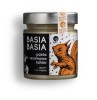
Tahini is sesame paste: sesame seeds ground until their own oil turns them into a smooth, pourable mass. Jars differ in whether the seeds were hulled, left whole, roasted or used raw. That is why the ingredients line deserves a glance before the price does. The jar on our tahini shelf is Tahini Paste 210 g Basia Basia, made in Poland from roasted sesame 100%.
Per 100 g the label gives 657 kcal, 59 g of fat, 24 g of protein and 7.2 g of fibre. That makes the jar high fibre and a source of protein. Sugars sit at 0.7 g and salt at 0.08 g, so a spoonful brings richness rather than sweetness. Any jar of tahini paste rests on the same short list, and the differences you taste come from the seed and the roast.
Light tahini and dark tahini
Light tahini and dark tahini describe the seed and the roast rather than two separate recipes. Paler pastes usually come from hulled sesame and taste milder and smoother, while darker ones tend to use whole or brown seeds, or simply a longer roast. In side-by-side tasting the pale version reads creamier and gentler, and the brown-seed version reads earthier and more assertive.
Colour alone does not identify the process. A light roast on brown seed and a heavy roast on hulled seed can land in much the same shade. The ingredients line settles what went in, and a spoonful settles the rest.
How do you use tahini in cooking?
Tahini works wherever a savoury, nutty richness helps, which covers far more ground than the hummus most jars are bought for. Knowing how to use tahini day to day comes down to three settings: savoury sauces, sweet bakes and bowls built on grains. Each of them asks something slightly different of the paste.
Savoury dishes and dressings
Lemon, garlic, salt and tahini make the sauce that carries roasted vegetables, grilled meat and warm flatbread. Thinned further it becomes a dressing for salads, and left thick it works as a spread under grilled tomatoes on toast. Sesame takes heat and acid well, so a squeeze of lemon usually does more for the sauce than another spoonful of paste.
Sweet recipes
Sweetness suits tahini because its faint bitterness pushes back against sugar instead of disappearing into it. Swirled through porridge, folded into ice cream or worked into cookie dough in place of part of the fat, it leaves a toasted, savoury edge. Halva does the same thing in concentrated form, which is why sesame and sugar are such an old pairing.
Grain bowls
A bowl of cooked grains, roasted vegetables and thinned tahini is the fastest way to give the paste a regular slot in the week. The healthy groats shelf covers millet, buckwheat both roasted and unroasted, spelt, barley, bulgur and corn couscous, and every one of them takes a sesame dressing. Firmer grains hold the sauce on the surface, while softer ones absorb it and turn creamy.
How do you make a tahini dressing that does not split?
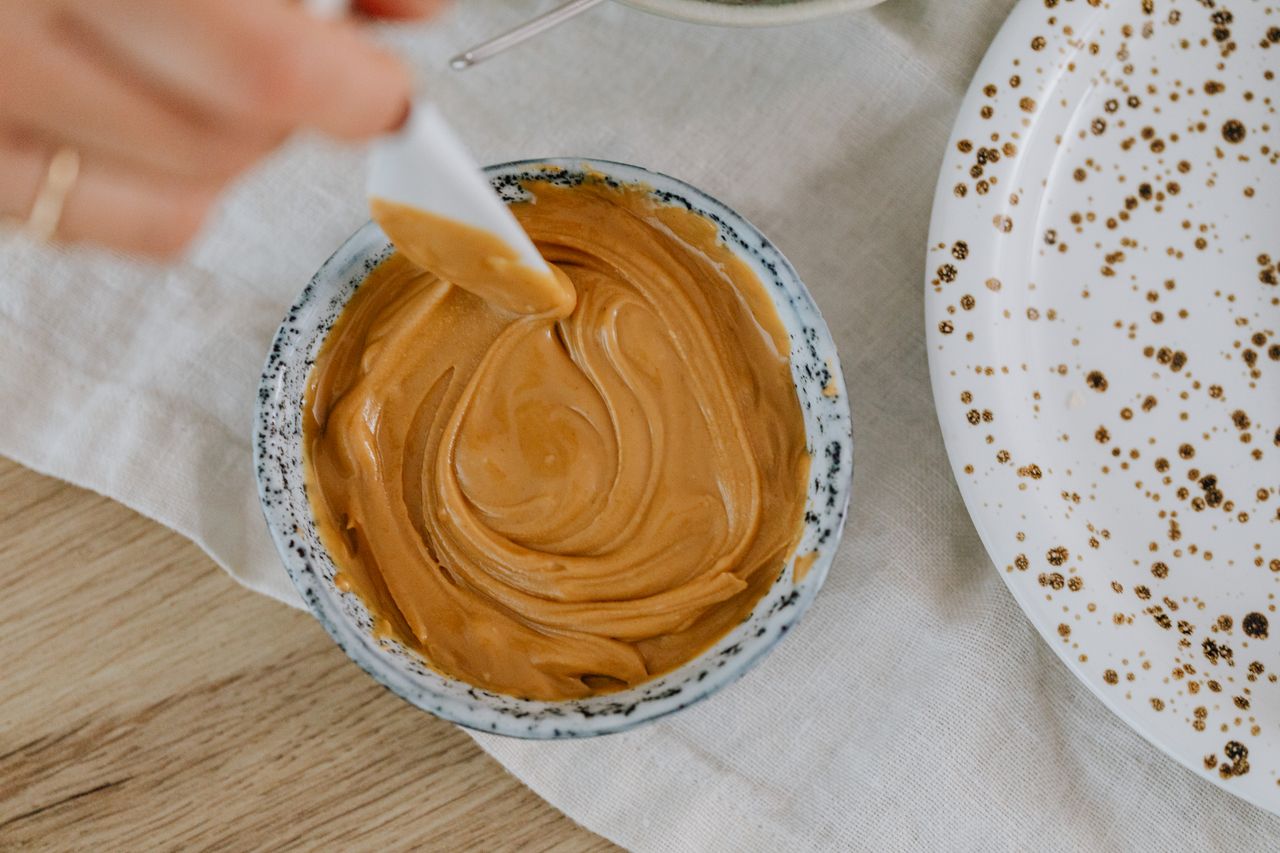
A tahini dressing holds together when you add cold water slowly and keep whisking through the stage where the paste seizes. The first spoonfuls make it far thicker than it was in the jar. That looks like failure. It is simply what happens when a little water meets a lot of oil.
Keep going and the mixture flips: past roughly a third water by weight it becomes an oil-in-water emulsion and pours cleanly. Lemon juice, garlic and salt go in after that point, because they blend in far more evenly once the texture is already smooth.
The finished sauce is no longer the low-moisture paste it started as, so refrigerate it promptly and follow the storage line on the jar.
Tahini and nut butters side by side
Shops file tahini with the nut butters even though sesame is a seed, and the nut butters section here runs from peanut, almond and cashew through pistachio and hazelnut spread to tahini. Sesame is a seed, not a nut, so the grouping follows how people shop rather than botany.
Three families take up most of that shelf:
- Almond: roasted almond butter and white almond cream sit at opposite ends, one toasted and firm, the other pale and soft.
- Cashew: roasted cashew butter and cashew cream are the mildest and the sweetest of the group.
- Peanut: smooth and crunchy versions dominate, including jars made with no added salt and no added sugar.
Composition tracks closely across that shelf: energy, fat and protein land within a rounding error of each other. Fibre is where they part. Organic Roasted Almond Butter 250 g Bio Planet declares 5.4 g per 100 g, the sesame paste 7.2 g. Both count as a source of protein, while the almond butter is a source of fibre and the tahini is high fibre.
How should tahini be stored?
Tahini keeps in a cool, dark cupboard, and the layer of oil that rises to the top is a normal physical change. Oil on top is separation, not spoilage: the fat and the ground seed drift apart while the jar stands still, over weeks rather than days. Stir from the bottom until the oil is fully worked back in, and the paste returns to the texture it had on day one.
Formulations differ, so follow the storage line printed on your own jar rather than a general rule. Anything mixed with water, lemon or fresh garlic counts as a different product and belongs in the fridge.
Getting a full jar of tahini used
A 210 g jar empties quickly once tahini stops being reserved for hummus, and the simplest route is to attach it to food already on the weekly list. None of it needs a recipe or a separate shopping trip.
Four everyday slots take a spoonful without any planning:
-
Breakfast: a spoonful stirred into porridge or spread on toast under honey does the work butter usually does.
-
Roast vegetables: thinned tahini poured over carrots, aubergine or cauliflower straight from the oven covers the whole tray.
-
Baking: replacing part of the fat in cookies or brownies leaves a toasted, faintly bitter edge against the sugar.
-
Leftovers: a dressing mixed at the weekend turns cold grains and roasted vegetables into a bowl worth eating.
A jar opened weekly never separates hard enough to need rescuing, which is the quiet argument for treating tahini as a staple rather than a curiosity. We stock it at 4ecoshop with everyday cooking in mind. Put tahini where the usual paste goes in one dish you already cook well, and judge the swap on that plate!
Frequently asked questions about tahini
Why does tahini taste bitter?
Mild bitterness belongs to sesame itself and shows up most in whole-seed and darker, longer-roasted pastes. A sharp, stale or fermented smell is a different signal and points to a jar past its best.
Should tahini be kept in the fridge?
Chilling an unopened jar is not required, and it changes texture more than safety. Cold tahini stiffens hard and resists mixing the risen oil back in, so a jar straight from the fridge will not spread or loosen into a sauce, while at room temperature it stays pourable. The real factor is how quickly you get through the jar.
Can tahini replace peanut butter?
It swaps in well in sauces, on toast and in many bakes, though not perfectly one for one, because flavour, thickness and allergens all differ. Recipes leaning on peanut sweetness usually want a little honey or syrup to balance the change.
Is tahini suitable for a nut allergy?
Sesame is a seed rather than a nut, but it counts as a separately regulated allergen, and the Basia Basia label states that the product may contain almonds, hazelnuts, milk, eggs, sesame and soya. Check the label and the may-contain statement on any jar before deciding.
How do you stir tahini that has hardened?
A jar that has set solid responds to a stick blender or a food processor far better than to a spoon and patience. Tipping the contents into a wider bowl first also helps, because the narrow neck is what makes the job difficult.