 SAME DAY DISPATCH; ORDER BY 2PM
 SECURE PAYMENT
 4.8/5 RATING
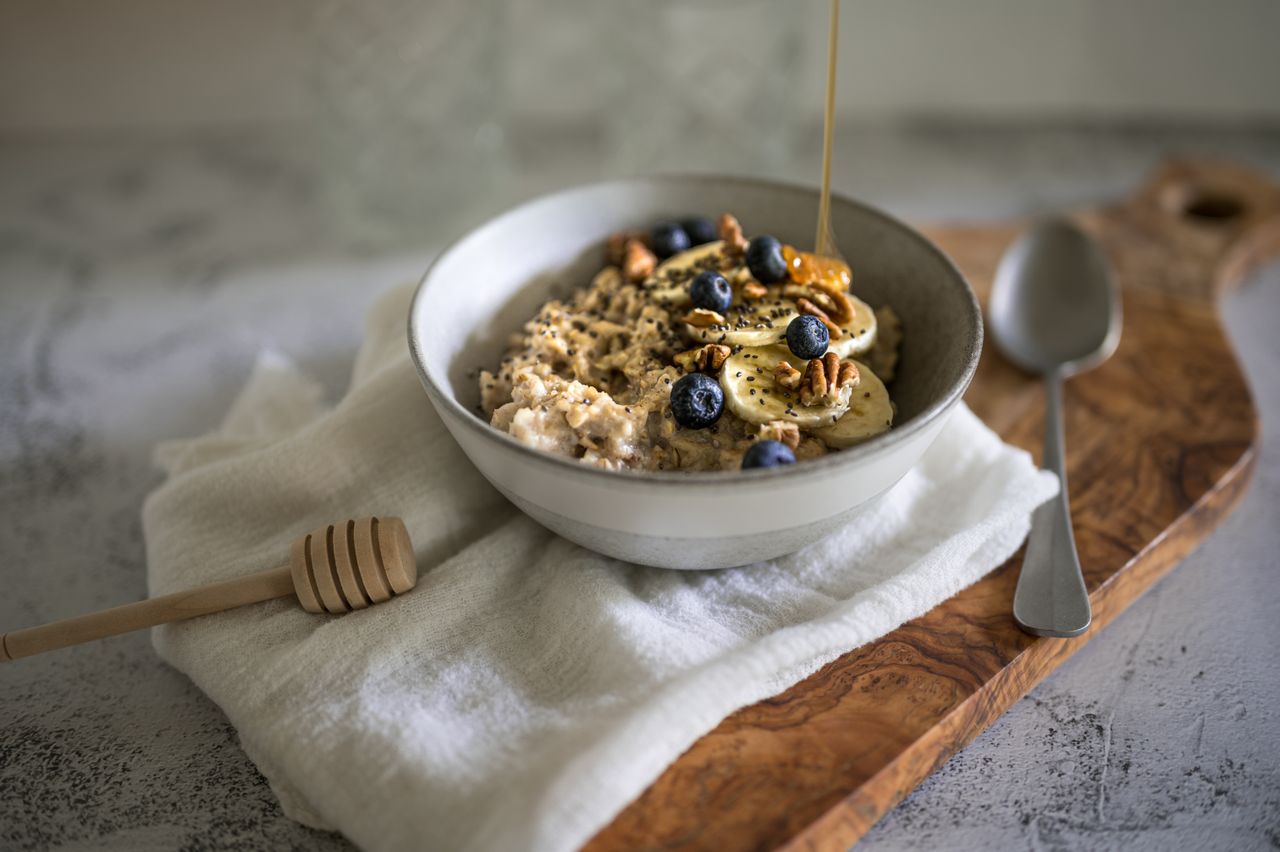
How to make porridge from grains other than oats
Porridge without oats is a question of which grain goes into the pan, not of a different recipe. Anyone eating the same bowl every morning, or avoiding oats for good reasons, can put millet, buckwheat or spelt underneath the same toppings and keep the routine intact. The one thing that changes is timing, because every grain drinks water at its own speed. Here is how each one tastes, how long it needs on the hob and how to spread them across a week of breakfasts!
Key takeaways:
- The grain sets the flavour: millet stays mild and creamy, while buckwheat brings a darker, nuttier taste.
- The cut sets the timing: flakes soften in minutes, whole groats want a much longer simmer.
- Gluten differs by grain: millet and buckwheat are naturally gluten-free, spelt and rye are not.
- Low heat prevents catching: a heavy-based pan and a gentle simmer work better than stirring hard at the end.
- Rotation keeps breakfast alive: two or three grains across the week already give five different bowls.
Which grains work for porridge?
Almost every whole grain makes porridge, but millet, buckwheat and spelt come closest to the texture oat eaters expect. Teff, amaranth, quinoa, rice and barley all cook into a morning bowl as well, usually in flake form. In British English the word porridge still means oats, so naming the grain avoids confusion: millet porridge or buckwheat porridge.
Ready-made pots and protein blends on the healthy porridge shelf answer a different need: breakfast in ninety seconds at a desk. Cooking from scratch takes longer, yet it puts you in charge of sweetness, thickness and what lands on top.
Millet
Hulled millet gives the gentlest move away from oats: a soft, faintly buttery bowl with no bitterness of its own. A pan of millet porridge takes warm spices, fruit compote and honey without a fight, and it keeps thickening as it stands. Rinse the grains first, then toast them briefly in the dry pan if you want a rounder, nuttier result. Millet is naturally gluten-free.
Buckwheat
Buckwheat tastes considerably stronger than millet and holds a light bite even when it is fully soft. Unroasted groats are pale and mild, roasted ones dark and pronounced, and that single choice changes breakfast more than any cooking technique. Despite the name, buckwheat is not a wheat at all but a pseudocereal, and it is naturally gluten-free.
Spelt and rye
Spelt reaches the breakfast bowl as groats, fine groats and semolina, not as flakes, and that is worth knowing before you shop. Spelt semolina swells into a smooth, milky porridge in a few minutes, whereas whole spelt berries need an overnight soak and a long simmer. Emmer and einkorn semolina behave much the same way in the pan.
Rye usually arrives in mixed breakfast blends rather than as a grain you cook on its own. Keep one thing in mind before you plan a week around either of them: spelt and rye both contain gluten, spelt because it is a variety of wheat.
How long does each grain take to cook?
Cooking time follows the cut far more closely than the name of the grain, so a bag of flakes and a bag of whole groats never share a timing. The plain grains we keep in healthy groats sit at the slower end, from millet and buckwheat through to spelt and barley.
These starting times cover the cuts used most often for a morning bowl:
Treat those figures as a starting point and cook until tender rather than to the clock, because variety, pan and grain age all shift them. Keep hot water or a plant drink to hand and top the pan up whenever it dries before the grain has softened.
Flakes or whole grains for a morning bowl?
Flakes give you speed and a soft, even texture, while whole grains give you bite and a bowl that holds its shape. Both cuts are available for most cereals, so the choice comes down to the morning, not the grain. Millet, buckwheat, rice, amaranth, quinoa and teff all appear as flakes on the healthy cereal shelf. Spelt and emmer, by contrast, are sold as groats and semolina, which is why a spelt porridge tastes different from a flake-based one.
Three things change when you move from flakes to whole grains:
- Timing: whole grains ask for a long, quiet simmer, while flakes are ready before the kettle has cooled.
- Liquid: intact grains absorb steadily, so top the pan up instead of pouring everything in at the start.
- Texture: flakes collapse into a smooth mass, whereas groats stay separate enough to chew.
No single ratio covers both cuts, so follow the proportions printed on the pack you actually bought.
How do you cook porridge without it catching?
Porridge catches when starch settles onto a hot base, which makes a heavy-based pan on a low simmer the whole solution. Thin pans create hot spots the spoon cannot reach in time, and a rolling boil pushes the grain against the metal instead of through the liquid.
Stir across the bottom of the pan rather than round the middle, since the thickest layer always forms where the heat is. As the starch swells the mixture tightens fast, and the answer is more liquid, never more heat. Milk and plant drinks scorch sooner than water, so many cooks start the grain in water and stir the drink in during the last few minutes.
Which toppings turn porridge into a meal?
Toppings turn porridge into a meal when they bring fat, protein and acidity to a bowl that is otherwise mostly starch. That is also what stops the same breakfast becoming dull by Thursday, since the base grain is quiet enough to carry very different additions.
Four groups of toppings do most of the work:
- Nuts and seeds: almonds, walnuts, sunflower and pumpkin seeds add crunch, and a spoon of nut butter melts straight into a hot bowl.
- Fruit: berries and grated apple keep things fresh, while a quick compote of frozen fruit sweetens the bowl without any sugar in the pan.
- Something poured on: a splash of milk, plant drink or yoghurt loosens a stiff porridge and cools it to eating temperature.
- Savoury additions: buckwheat and millet also take an egg, wilted greens, olive oil or a pinch of salt if a sweet breakfast is not your thing.
Add crunchy toppings at the table rather than in the pan, because they soften within a minute or two in the steam.
Building a porridge rotation through the week
A rotation works when the grains differ in texture, not merely in name, so pick two that behave in opposite ways. Millet and buckwheat make a natural pair: one is creamy and mild, the other firm and nutty, and both cook without any planning the night before.
Weekday mornings suit semolina and flakes, which are on the table in the time it takes to make coffee. Whole groats fit a slower morning, and whole spelt berries belong to the weekend, when an overnight soak is no inconvenience. Keeping the toppings constant for a while makes the difference between the grains easy to taste.
Most people settle on a small set after a fortnight or so, usually one fast cut for busy days and one they cook properly at the weekend. Once two or three grains live in the cupboard, breakfast stops being a single fixed dish and turns into a quiet weekly rhythm.
Frequently asked questions about porridge
Which porridge suits a gluten-free diet?
Millet, buckwheat, rice, teff, amaranth and quinoa are naturally gluten-free grains, while spelt, emmer, einkorn, barley and rye are not. Naturally gluten-free grain can still pick up gluten during milling or packing, so anyone with coeliac disease should choose products labelled gluten-free, which in the UK means no more than 20 mg per kilogram.
Can you make porridge the night before?
Yes, provided you cool it quickly, refrigerate it within two hours and eat it within two days, or freeze it instead. Reheat only the portion you need, and only once, stirring until the heat reaches the middle of the bowl.
Why does millet porridge taste bitter?
A bitter, stale note usually points to fat in the grain turning rancid, most likely once it has been milled or left open for months (the evidence here mainly covers milled flour, so treat this as a likely cause, not a certainty). Fresh millet smells mild and faintly sweet, so buy smaller bags and check the date rather than stocking up for months.
Water or plant drink for porridge?
Water lets the flavour of the grain come through and is the easier option with whole groats, which need a long simmer. Plant drinks give a richer, softer bowl but vary widely in sugar, protein and added vitamins, so the label is worth a glance before you pick one.
How do you reheat porridge without drying it out?
Add a splash of water or drink before the pan goes back on, then warm it gently and stir until the texture loosens again. Porridge thickens in the fridge because the starch sets, so the liquid is replacing what the grain has taken up rather than diluting the bowl.