 SAME DAY DISPATCH; ORDER BY 2PM
 SECURE PAYMENT
  4.8/5 RATING
What are isotonic drinks and when do you need one?
You are at the shelf with a tub in your hand, or sitting after a workout with your bottle, and the word isotonic looks back at you from the label. Isotonic drinks only exist in the glass, once powder and water have met, so what sits in the tub is not one yet. Add more water to the same scoop and you get something else entirely. Stay with us for the powder-to-litre ratio and for what the label on that tub actually says!
Key takeaways:
- Three bands, one measure: hypotonic sits below the concentration of blood plasma, isotonic close to it, hypertonic above.
- Carbohydrate and sodium sort the drinks: what counts is the amount dissolved in each 100 ml of the prepared drink.
- The mixing ratio moves the result: more powder gives a stronger solution, more water a weaker one, from the same tub.
- Preparation separates the formats: powder is measured, a tablet dissolves to a fixed dose, a bottle arrives mixed.
- One label, read in full: a prepared 250 ml glass of Iso Plus Cola lists 60 kcal, 15 g of carbohydrate of which 12 g sugars, and 0.29 g of salt.
What does isotonic mean?
A prepared drink is isotonic when its dissolved particles sit at roughly the level found in blood plasma. Those particles come from carbohydrate and from electrolytes such as sodium and potassium, which is why carbohydrate and sodium per 100 ml are the two lines that place a drink in one band or another.
Tonicity belongs to the liquid rather than to the container, so a scoop of powder or a tablet has none of its own until it meets water. Published cut-offs also differ between sources, with the isotonic band usually drawn somewhere around 270 to 330 milliosmoles per kilogram.
Isotonic, hypotonic and hypertonic drinks compared
The three names mark three bands measured against blood plasma, and the hypotonic vs isotonic boundary is a matter of how much carbohydrate and salt end up dissolved in each 100 ml. That is the measure behind everything listed in the isotonic drinks category, from cola-flavoured powders to sealed bottles.
Three bands, read against the concentration of blood plasma:
The band belongs to the prepared solution, which is why one tub can produce a drink from two different rows depending on how much water the powder meets. A stronger mix moves the result up a band and a weaker one moves it down.
When is an isotonic drink useful?
The type of session you have in mind is what makes one composition relevant and another beside the point. A drink mixed to carry carbohydrate is a different product from one that dissolves to electrolytes with little or none, and the difference shows up in the carbohydrate line of the nutrition panel.
Manufacturers also set out the intended use themselves. An isotonic powder in a 700 g tub such as Iso Plus Cola from Olimp Nutrition is sold as sports nutrition, with a stated serving and a stated volume of water. Products in the same category dissolve to different amounts of carbohydrate and sodium, so composition is worth comparing before tub size.
Powder, tablets or ready-to-drink?
Powder, tablets and bottles reach the same concentration by three different routes: one you measure, one you count, one you open.
How the three formats compare in preparation:
- Powder: you weigh or scoop each serving, so the concentration follows the ratio you use and one tub covers many glasses.
- Electrolyte tablets: a tablet carries a fixed dose that dissolves in a set volume of water, and the tube is easy to carry.
- Ready-to-drink bottles: composition is fixed before the bottle is sealed, so the panel describes exactly what is poured.
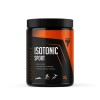
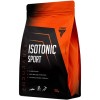
Our isotonic range carries all three formats: powders such as Iso Plus Cola 700 g from Olimp Nutrition and Endurance Isotonic Sport from Trec Nutrition, effervescent tablets in the Iso Plus Effervescent Orange 6x10 pack, and Bodyfuel Electrolyte and Vitamin Water in 12x500 ml bottles. Each of those packs carries its own preparation instructions.
How much powder do you mix per litre?
No single figure covers every product, because each powder sets its own serving mass and its own volume of water. Iso Plus Cola is prepared as 17.5 g in 250 ml. That scales to roughly 70 g per litre, and another tub in the same category will give a different pair of numbers for the same litre.
Scaling itself is plain arithmetic: two 250 ml servings make half a litre, four make a litre, and the stated ratio holds all the way up. Adding extra powder gives a more concentrated solution and adding extra water gives a weaker one. The same arithmetic covers other powders dissolved in water, including EAA supplements, a separate category with its own serving instructions.
What is in an isotonic drink?
A nutrition panel on an isotonic powder is read per serving of prepared drink, and the lines that describe it are carbohydrate, sugars, salt and sodium, then the minerals and any added vitamins. Iso Plus Cola sets those figures against a 250 ml glass.
What the panel lists for one prepared 250 ml glass:
- Energy: 60 kcal, with no fat and no protein.
- Carbohydrate: 15 g, of which 12 g are sugars.
- Salt: 0.29 g, which is 0.12 g of sodium.
- Minerals: 85.7 mg of potassium, 25 mg of calcium and 12.6 mg of magnesium.
- Vitamins: once mixed, the drink is a source of vitamins A, D, E and C, niacin, folic acid, biotin and pantothenic acid.
Other drinks are read from the same lines. An NFC pressing among our healthy juices, such as Organic Beetroot Juice NFC 270 ml from Dary Natury, lists its own sugars per 100 ml, so two categories that look unrelated are compared figure against figure.
Choosing an isotonic drink: what to remember
Everything above comes back to one measurement and one instruction: carbohydrate and sodium per 100 ml of the prepared drink, and the ratio the manufacturer sets for reaching it. Format changes how the drink is made, while the measure behind it stays the same. Our isotonic range gives you all three formats at that one measure, so the choice comes down to how you want to prepare the glass!
Frequently asked questions about isotonic drinks
What is the difference between isotonic and electrolyte water?
An electrolyte drink is named after what it supplies, mainly salts with little or no carbohydrate, while isotonic names the concentration of the whole solution. Two products can both list sodium and still sit in different bands.
How much isotonic powder per litre?
The scoop or gram figure printed on your own tub is the one to use, and scoop sizes differ between tubs, so a scoop borrowed from another powder will not measure the same dose. Where the pack gives grams, weigh them rather than estimating.
Can you drink isotonic drinks outside training?
Yes, the pack sets a serving and a volume of water, not an occasion. The composition stays the same wherever it is poured, so the carbohydrate and sugars listed on the panel count exactly as they would in any other drink.
Do isotonic drinks contain sugar?
Sugars are listed within the carbohydrate line, and the amount differs from product to product. The number per 100 ml of the prepared drink is the one to read.
How long does a mixed isotonic drink keep?
Manufacturers set that themselves and the answer differs between products, so check what the tub or bottle says about the prepared drink. Once the powder is dissolved you are keeping a made-up solution rather than a sealed product, and the two are not treated the same way.