 SAME DAY DISPATCH; ORDER BY 2PM
 SECURE PAYMENT
  4.8/5 RATING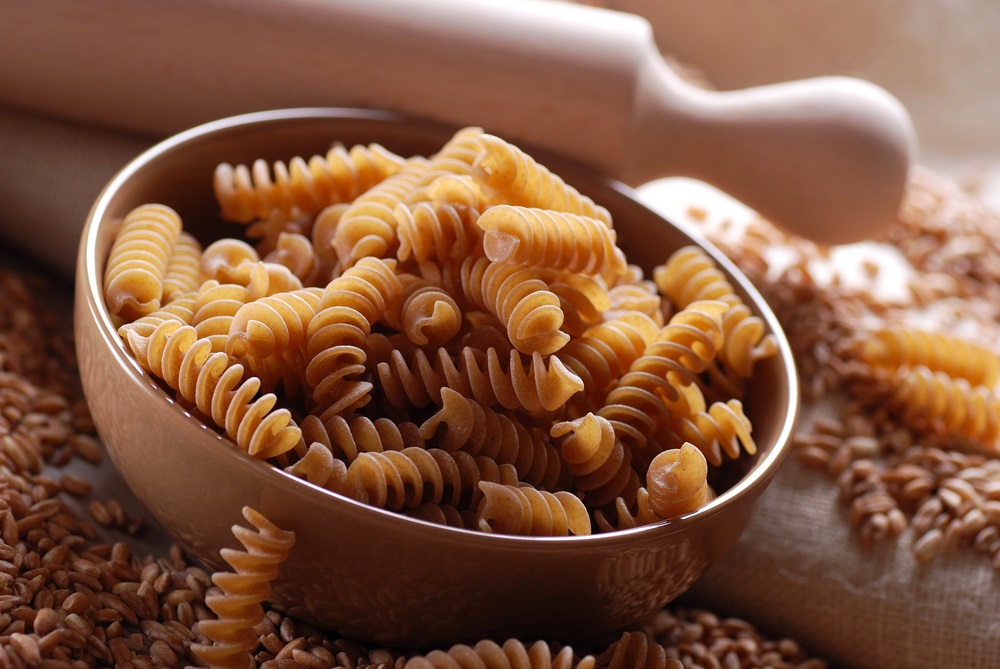
How to cook wholemeal pasta so it keeps its bite
You stand over the pan with one hand on the colander, waiting for the moment to tip the water away. Learning how to cook wholemeal pasta well starts there, because bran level, particle size, shape and drying each pull the timing their own way. Two wholemeal shapes from different mills can land minutes apart, so a timing worked out on one pack rarely carries over to the next.
Key takeaways:
- Taste before the timer: the printed time is a ceiling, so lift out a piece early and drain while the centre still resists.
- Wholemeal is a flour question: the flour keeps the bran, germ and endosperm, while the grain named on the front points to flavour and to the character of the kernel.
- Bran shifts the texture: it changes how much water the pasta takes up and how much starch it loses, which moves the point where firm turns soft.
- Two numbers worth knowing: a 500 g pack of organic wholemeal semolina fusilli carries 8.9 g of fibre and 12 g of protein per 100 g.
- Sauce takes over at the end: when the pasta finishes in a hot pan, it should leave the boiling water earlier and firmer.
What is wholemeal pasta made of?
Wholemeal pasta is made from flour that still carries the bran, germ and endosperm of the grain, and that is all the word promises. Semolina names milled durum wheat, so a semolina shape counts as wholemeal only when the ingredients panel says the flour is wholemeal too. Colour will not answer it for you, because darker strands take their tone from bran and from the natural pigments of the grain. What changes in the pan is structure, and structure is what the bran brings.
A 500 g pack of organic wholemeal semolina fusilli shows what that looks like in practice: organic wholemeal durum wheat flour, and a panel listing 8.9 g of fibre and 12 g of protein per 100 g. Those figures make it high in fibre and a source of protein under UK labelling rules, which is useful shorthand when you compare one pack against another. Durum wheat also means the pasta contains gluten, so it stays off the table when you cook for someone avoiding it.
How long do you cook wholemeal pasta?
There is no single brown pasta cooking time, because shape, thickness, flour, bran level and drying all pull the number in their own direction. The packet time works as a ceiling, not as an instruction. Start tasting about two minutes ahead of the stated time and lift the pan off the heat while the middle still resists the tooth.
A pan of wholemeal pasta rewards a fixed order of moves, so work through it like this:
- Boil generously. Bring a large pan of water to a rolling boil and salt it before anything goes in.
- Stir in the first minute. That is when shapes glue themselves to each other and to the base of the pan.
- Taste early. Fish out one piece around two minutes before the packet time and bite straight through the centre.
- Drain on the firm side. Pull the pan while the middle still shows a pale, chalky core, because the heat already in the pasta keeps working in the colander.
Two shapes will rarely agree on a number: a thin wholemeal spaghetti and a thick fusilli want different windows on the same hob. Once you know how one shape behaves, the timing carries over to every pack of that type on the wholemeal pasta range.
Why does wholemeal pasta overcook so easily?
Bran sits between the gluten and starch that hold a strand together, and that interruption changes how much water the pasta takes up and how much starch it loses to the pan. The practical result is often a shorter window between firm and soft, and with some shapes a minute of inattention is enough to pass it. The same minute counts after draining too, because a hot colander is not a neutral place to leave pasta standing.
It would be convenient if bran simply made wholemeal pasta cook faster, and kitchens keep proving otherwise. Total cooking time often lands close to white pasta of the same shape, and what changes is how little margin is left once it gets there.
Rye, spelt and semolina pasta compared
Rye pasta, spelt pasta and semolina pasta differ in flavour, in how firmly they hold their shape and in how loosely the word wholemeal attaches to them. Rye usually brings the deepest, most savoury note, spelt sits closer to ordinary wheat with a nutty edge, and durum semolina gives the springiest bite of the three.
Read each grain on its own terms before it goes into the water:
- Rye: the strongest flavour of the group, with no standard cooking time to fall back on, so the first taste comes early.
- Spelt: close to everyday wheat in taste, and the grain name on the front of the pack says nothing about how finely the kernel was milled.
- Semolina: milled durum wheat, springy and faintly nutty when the flour behind it is wholemeal, and the closest of the three to standard dried pasta.
The same span runs through the wholemeal flours these shapes are milled from, where rye type 2000, einkorn, emmer and red wheat sit under one heading with very different characters. Not every spelt or rye pasta is wholemeal, and each of these flours behaves differently once the water is boiling. Put a rye shape and a spelt shape through the same pan on separate evenings; the first fork test will land at a different minute each time.
Which sauces suit wholemeal pasta?
Wholemeal pasta suits sauces with body, so tomato, mushroom, pulse and roasted-vegetable sauces tend to work best against a nutty, mineral flavour. Thin dressings fare less well here, because the bran flavour stays present long after a light dressing has faded.
A sauce works on wholemeal shapes when it has enough body to cling to the ridges:
- Tomato passata and concentrate: the acidity cuts through the bran flavour and the texture stays loose enough to coat every spiral.
- Pesto: basil, courgette and sundried tomato versions bring fat, which carries flavour down into the grooves of a wholemeal shape.
- Mushroom sauces: the savoury depth sits comfortably beside the earthiness of the bran and needs no extra seasoning to bridge the two.
Whichever one you pick, the last stretch belongs to the pan: drain the pasta early, tip it into the hot sauce with a ladle of cooking water and let it finish there. Starch in that water pulls the sauce onto the pasta. The strand keeps cooking in the hot pan, so the shape should leave the boil firmer than you would serve it. Our tomato and pesto sauces have the body for that job, so a wholemeal pasta recipe you already cook rarely needs rewriting.
Cooking wholemeal pasta: what to remember
How to cook wholemeal pasta well shows in the last stretch: plenty of water, one early taste and a drain while the centre holds. Everything before that is preparation. Everything after belongs to the sauce. That is what an al dente wholemeal shape feels like, firm at the centre and still recognisable after two minutes in a hot pan. Give the shape you cook most often one early fork test tonight, and let the result set your timing for every pack that follows!
Frequently asked questions about cooking wholemeal pasta
How much salt do you add per litre of water?
About 7 g of salt per litre of water for every 100 g of pasta is a workable starting point, and it is a good deal less than the old sea-water comparison suggests. Scale it down when the sauce is already salty or when someone at the table watches their intake.
Should you rinse wholemeal pasta after cooking?
Pasta heading straight into a hot dish goes from colander to pan without a rinse, because the surface starch is exactly what helps the sauce grip. Rinsing has one job in this kitchen: cooling a batch quickly when you are building a cold salad.
Why is wholemeal pasta darker?
Because the whole kernel goes into the flour, and the darker outer layers travel with it. How deep that colour runs depends on the grain, so a rye shape can look considerably darker than a spelt one milled the same way.
Can you reheat cooked wholemeal pasta?
Yes, once. Cool the leftovers and get them into the fridge within two hours, eat them within 48 hours, and reheat until the dish is steaming hot the whole way through.
Is rye pasta cooked the same way?
Rye pasta follows the same method as any other wholemeal shape, so the difference sits in the window rather than in the routine. Handle it gently in the colander as well, because rye holds its shape less firmly than a durum semolina shape.