 SAME DAY DISPATCH; ORDER BY 2PM
 SECURE PAYMENT
  4.8/5 RATING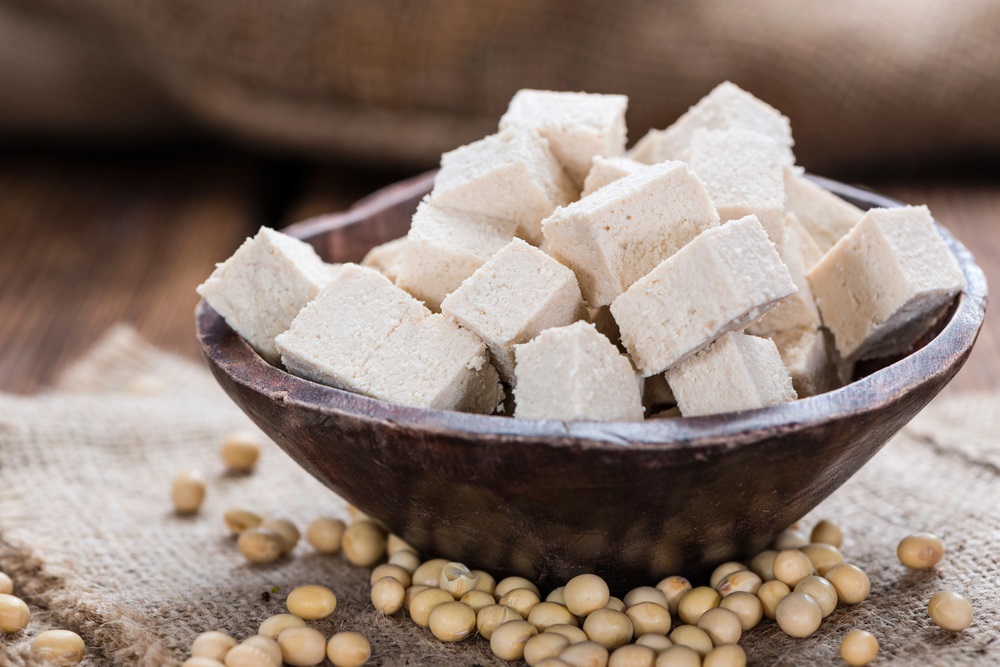
What is tofu and how do you cook it?
A block goes from the packet into a hot pan, and out comes something grey and soft that sticks to the base while the tofu takes the blame. So what is tofu, exactly? Soya milk is curdled and drained in a mould, which puts it closer to a fresh cheese than to anything you cook. That changes how you treat it, because a block made that way behaves nothing like a vegetable. The next sections cover how to ready the block before frying and what to serve it with!
Key takeaways:
- Pressing: a firm block gives up its free water under a weight, and that is what lets the surface crisp.
- Protein: at 16 g per 100 g the natural block is high in protein, and protein supports the maintenance of muscle mass.
- Allergens: tofu is a soya product, and the natural block also warns that it may contain sesame and lupin.
- Three textures: natural, smoked and silken blocks are set and drained differently, so they are not interchangeable in a pan.
- Gluten: plain soya curd brings none, but marinades, coatings and sauces can, so check the label on flavoured products.
What is tofu made of?
Tofu is soya milk that has been set with an acid or a mineral salt and then drained into a block, which keeps the ingredient list short. The natural 250 g block we stock lists SOI grain extract 92%, lemon juice, citric acid as an acidity regulator, water and salt. The lemon juice and the citric acid do the same job: they turn the soya milk into curd.
The nutrition table explains why the block behaves like a protein rather than a vegetable. It gives 114 kcal, 8.5 g of fat and 0.8 g of carbohydrate, alongside 16 g of protein per 100 g. That share of the energy makes the block high in protein, and protein contributes to the maintenance of muscle mass. Fibre sits at 1 g per 100 g, so tofu is not where you go looking for it.
How is tofu produced?
Soya beans are soaked, ground and boiled into soya milk, a coagulant is stirred in, and the curd that forms is drained and pressed into a mould. Some producers reach for mineral salts, others for an acid, and the natural block above is set with lemon juice and citric acid. The process is closer to making a fresh cheese than to cooking, which is why the finished block arrives ready to eat.
Firmness is decided at the draining stage. Water content, the coagulant and how long the curd is pressed together set how much the block holds together, so two products with similar descriptions can behave differently on a board. Press the curd longer and it slices; drain it briefly and it stays soft enough to spoon.
Natural, smoked and silken tofu: which to buy
What the block can do after the fridge follows from how firm it is. A pressed block slices, cubes and browns, while a softly set one collapses the moment you try to turn it.
You can see the difference the moment each block hits the board:
- Natural tofu is the plain, pressed block: firm enough to cube and fry once you dry it, and neutral enough to take whatever marinade you give it.
- Smoked tofu arrives seasoned and drier, so it slices straight into salads, sandwiches and pasta bowls without further cooking.
- Silken tofu is set softly and never pressed, which makes it a blender ingredient for sauces, soups and desserts rather than a frying block.
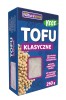
The flavoured and smoked versions share a shelf with our natural tofu 250 g, so turning both over shows what changed between them. These blocks sit in the vegan, gluten-free and keto food section, next to the pastas, flours and spreads on the same shelves.
How do you press tofu before cooking?
Wrap the block in a clean tea towel, set a flat plate on top with a weight on it and leave it for about half an hour, then pat the surface dry before you cut it. That is how to press tofu without buying a dedicated press, since a couple of tins do the work as well as any gadget. The towel matters as much as the weight, because it carries the water away from the block.
Pressing does two things at once: it firms the block up and it opens the structure slightly, so a marinade has somewhere to go. Do not expect a short soak to season the middle, though, because flavour travels slowly through soya curd and most of it stays near the surface. Silken tofu is never pressed, since any weight breaks the set, and a smoked block usually needs nothing more than a quick pat with kitchen paper.
How do you fry tofu so it stays crisp?
Tofu browns only when its surface is dry and the pan is already hot. Everything else follows from that, including how much you put in at once: a crowded pan drops in temperature and the cubes steam in their own moisture.
Check the things that decide whether a crust forms at all:
- Surface moisture: patting the cubes dry after pressing is what gives them colour, because a damp surface just releases steam.
- Pan temperature: a pan that is properly hot seals the outside quickly, while a cold start bonds the tofu to the metal.
- Space: the cubes need room around them, so two relaxed batches beat one crowded layer every time.
Turn the pieces only once a crust has formed, because moving them early tears the surface and leaves half of it behind. Sauce goes on at the end, once the outside has set: a spoonful from the sauces shelf, chilli, tomato or mustard-based, glazes the cubes without softening them again. Whether you use a pan, the oven or an air fryer, how to cook tofu follows that same principle.
What does tofu go with?
Tofu takes its character from what surrounds it, so a plate works when it brings something salty, something sharp and something starchy to the same bowl. Soy sauce, a squeeze of citrus and a grain or a noodle cover all three between them.
These are the combinations worth keeping in mind for a weeknight plate:
- Pasta and grains: smoked cubes and a tomato sauce turn a bowl of pasta or rice into a full meal without any other protein.
- Salads: thin slices of smoked tofu behave like a savoury cheese and need no cooking at all.
- Stir-fries: fried cubes go in last, after the vegetables, so the crust survives contact with the sauce.
- Soups and dressings: silken tofu blends into a smooth base and thickens without cream.
Most tofu recipes fall into one of those four patterns, which makes the shopping simpler than the cooking. A bag of wholemeal pasta and a jar of sauce cover the first pattern for a week of dinners, and the same cubes work cold in a lunchbox the next day.
Cooking tofu: what to remember
All of it rests on three things you control: water, heat and timing. Press a firm block, dry the surface before it meets the pan, give the pieces room and add sauce only once the crust has set. Season late, once the crust is there, because salt and sugar in a marinade catch and darken faster than the tofu itself.
Storage is the one place where the pack has the final word: keep an opened block refrigerated and stick to the storage and use-by directions printed on it, because producers set different windows. Gluten works the same way, since plain soya curd carries none while marinades, coatings and sauces can bring it in. Pick up a block at 4ecoshop, press it before it sees the pan, and the difference will show in the very first batch you fry!
Frequently asked questions about tofu
What does tofu taste like?
On its own it tastes mild and faintly beany with very little salt behind it, while smoked blocks carry a savoury note strong enough to season a dish on their own.
Do you have to press tofu?
Not always, and a short session still counts: a brief stint under a plate takes out enough water to change how the surface behaves, just less than a full half hour does. Without any pressing the block still cooks, only softer and paler.
What is the difference between silken and firm tofu?
Putting one in place of the other changes the dish: silken tofu blended into a dressing gives a smooth base, while a firm block in the same job leaves it grainy. Firm tofu dropped into a blended soup keeps its cubes and leaves the texture thin.
Can you freeze tofu?
Freezing suits firm blocks and changes the texture for good, leaving them chewier and more sponge-like, and the open structure takes up a marinade more readily.
How long does tofu keep after opening?
How long the pack allows is the only reliable answer, since that window is printed on each product. Before it runs out the block usually warns you anyway: a sour smell, a slippery surface or cloudy water around it, and then it goes in the bin.