


 SAME DAY DISPATCH; ORDER BY 2PM
 SECURE PAYMENT
  4.8/5 RATING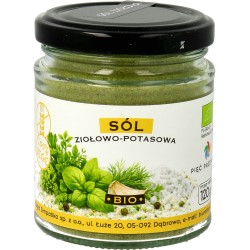
* for everyday dishes
* BIO certified
* simple composition
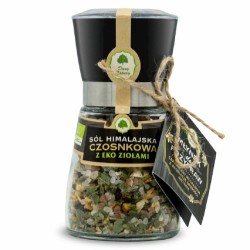
* Strong garlic flavor
* Salt and herb blend
* BIO certified
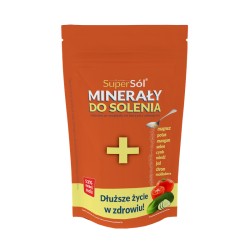
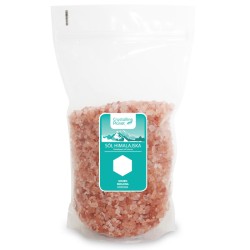
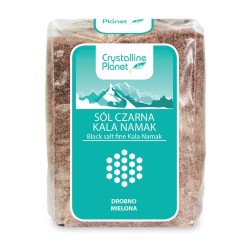
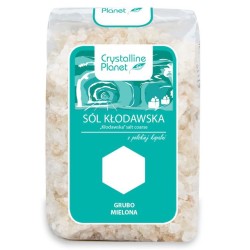
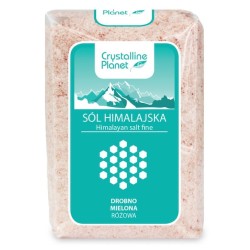
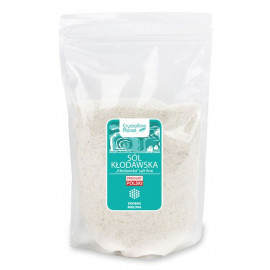

- Out-of-Stock
* Delicate flake texture
* Ideal for finishing dishes
* Gluten-free product
Unrefined Himalayan and Klodawska Salt
The same measure of salt seasons a dish differently depending on the grain, and our healthy salts shelf is sorted along exactly that line. At 4ecoshop you will find himalayan salt and Klodawska rock salt in coarse and fine grinds, plus two flavoured blends. Every pack names its grind and its pack weight. Match the grain to the way you cook and seasoning stops being guesswork!
Types of unrefined salt in the range
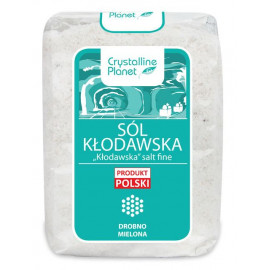
Unrefined salt skips the stage where crystals are dissolved, cleaned and re-formed into even grains. What reaches the pack is rock salt from the deposit, dried and milled, with its natural colour and uneven crystal intact. Seven of those packs come from a single producer, Crystalline Planet, which is why the grinds line up across the range instead of varying brand by brand: Klodawska salt comes coarse and fine in 600 g and 1 kg, and the himalayan side runs coarse in 1 kg or finely milled in 600 g.
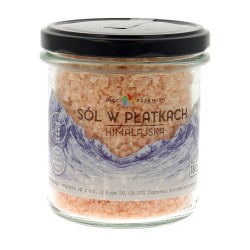
Pink salt is simply the himalayan grade under its everyday name. Beyond the Crystalline Planet core, three smaller packs widen the shelf. Salt flakes arrive in a 180 g box, thin and brittle rather than granular. A garlic salt from Dary Natury carries organic herbs in 140 g, and an organic herb and potassium salt fills a separate 120 g pack. Both carry organic herbs, which is why they sit with the rest of our organic products rather than beside plain salt.
Salt grain size and how it changes seasoning
Coarse salt dissolves slowly, which suits pasta water, brines and marinades, where the salt has time to spread. Himalayan salt in the coarse grade is also the one for a grinder, because the crystal is big enough to feed the mechanism. Fine grades clump inside a grinder and jam it. Measured by the spoon, coarse salt seasons more gently, since fewer crystals fit in the same spoon.
Fine salt goes the other way and disperses on contact. Use it in dough, in a sauce that is nearly finished and whenever you adjust seasoning at the table. If you are replacing a standard table pack, the fine Klodawska grade is a non-iodised salt and behaves in dough exactly the same. Salt flakes work differently again: they stay on the surface and give the finished dish a crunch you can feel. Choose them for the last thirty seconds, never for the pot.
Kala namak and flavoured salts
Kala namak is not subtle: also sold as black salt, it has a sulphurous, savoury profile that people buy on purpose for particular dishes. It comes here as a fine 600 g pack. A pinch is enough in scrambled tofu, in a chutney or over a yoghurt dip. Add it at the end and taste as you go, because the aroma carries further than the saltiness.
Flavoured salts season and salt in one move, and the garlic and herb blend suits roast potatoes, dressings and anything that would otherwise need chopping. When you would rather keep those two decisions apart, plain dried herbs leave the salt level on your side. A pasta sauce or a mustard from our healthy sauces arrives already salted. Taste it first, then finish the plate with flakes for texture rather than for saltiness.
Storing salt in the kitchen
Salt does not go off, but what changes in a badly kept pack is the texture, because salt draws moisture from the air. Keep the pack sealed, decant the fine grade into a jar with a tight lid and never dip a wet spoon into it. A clumped block is not spoiled – break it up and carry on.
Kala namak deserves its own sealed jar, since its aroma transfers to whatever sits beside it. Salt flakes keep their shape only if nothing heavy rests on the box. With the 1 kg packs, work from a small jar on the worktop and leave the rest closed. Then the himalayan salt you bought coarse still pours coarse three months later.