


 SAME DAY DISPATCH; ORDER BY 2PM
 SECURE PAYMENT
  4.8/5 RATING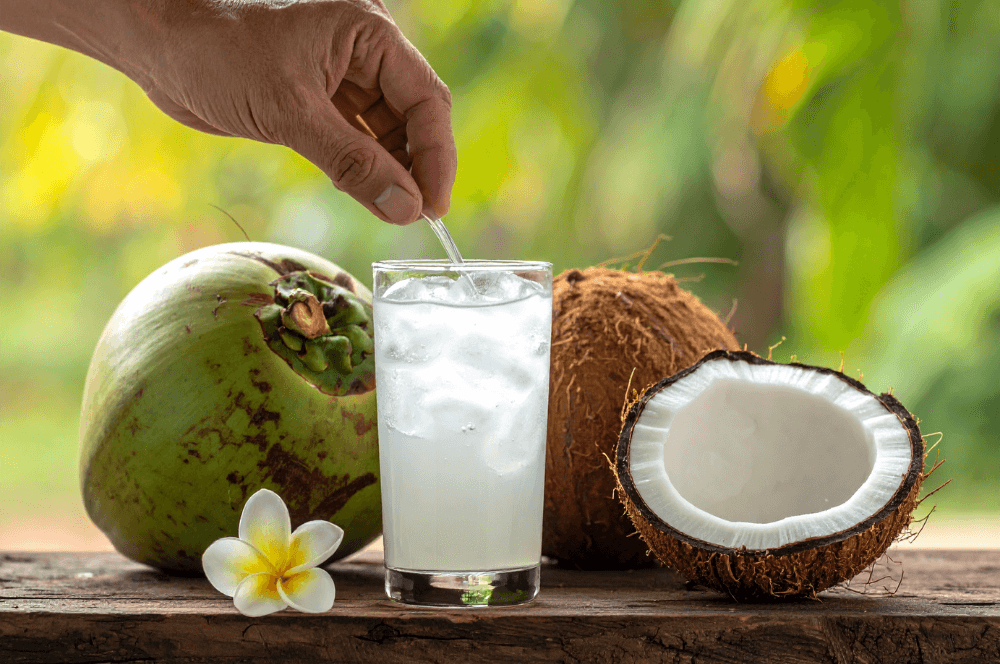
Is coconut water good for you? Hydration and electrolytes
Most first bottles disappoint for the same reason: the shopper expects the taste of coconut flesh, or assumes the carton holds the thick tinned product used for curry. Coconut water is neither. It is the thin, faintly sweet liquid a young green coconut holds inside before the flesh thickens, sold plain or blended with fruit juice, usually in 330 ml single servings. The tin is a cooking ingredient you open when a sauce needs body.
The short version on coconut water:
- What it is: the clear liquid from inside a young green coconut, filtered and bottled as a drink.
- How it tastes: mild, lightly sweet and faintly mineral, which is rarely what a first-time drinker expects.
- What the label shows: sugars, salt and juice content differ from bottle to bottle, so the table matters more than the front of the pack.
- What we stock: at 4ecoshop coconut water comes as a ready drink with fruit juice, in two 330 ml bottles, pineapple and mango.
- In the kitchen: it works chilled, as a smoothie base, in sorbets and fruit jellies, and for soaking chia seeds.
What is coconut water?
Inside a young green coconut sits a thin, clear liquid, and that liquid is the whole product. The nut stores it while the flesh is still soft and jelly-like, and it is drawn off, filtered and bottled before the shell hardens.
Nothing is pressed out of the solids, which is why the result stays watery and never turns creamy. Bottled coconut water then reaches the shelf either on its own or blended with fruit juice, and that split is the first thing to check on the front of the pack.
Coconut water nutrition
There is not much to read on the back of the bottle. A 330 ml drink made from coconut water with mango juice lists 26 kcal (109 kJ) per 100 g, 6.5 g of carbohydrate, no fat and 0.05 g of salt, plus ascorbic acid and natural flavouring on the ingredients list.
Figures move between products, because juice content, the maturity of the nut and its origin all feed into them. Comparing coconut water nutrition across brands comes down to two rows: sugars and salt.
How much sugar is in coconut water?
The mango bottle carries 6 g of sugars per 100 g, all of it inside the 6.5 g of total carbohydrate. Those sugars arrive with the coconut water itself and with the juice blended into it, since the ingredients list runs coconut water, mango juice, ascorbic acid and flavouring, with no separate sugar. Units differ between labels, so convert before you compare two packs.
Does coconut water have electrolytes?
Electrolytes is simply the name for a group of minerals, and coconut water holds four of them: potassium, sodium, magnesium and calcium, all naturally present in the liquid inside the nut. How much of each ends up in a bottle depends on the coconut and on what was added, and most labels print only the salt figure: 0.05 g per 100 g on the mango version. For potassium, look for a pack that prints the amount in its table.
Is coconut water hydrating?
Most of what sits in the bottle is plain water, and the rest of the table is short: 6.5 g of carbohydrate and 0.05 g of salt per 100 g, plus the minerals that come with the liquid. That is the composition, and it is as far as a label can honestly take the question. In daily use it behaves like any other chilled soft drink in a 330 ml serving.
Is coconut water more hydrating than water?
Plain water stays the baseline, and coconut water sits beside it as a flavoured drink with its own nutrition table. Tap or bottled water brings zero calories and zero sugars, while the mango bottle brings 26 kcal and 6 g of sugars per 100 g. That is a comparison of composition, which is the only thing two labels settle between them.
Working out how much water you should drink a day is the more useful starting point, and coconut water then counts as one of the drinks inside that daily total.
What does coconut water taste like?
Expect a mild, lightly sweet and thin drink with a faint mineral edge at the finish, closer to a soft fruit water than to anything in the baking aisle. Ripeness and origin both change it, which is why two bottles can taste noticeably different. Blends shift it further: 6 per cent mango juice puts mango first and coconut second, and the pineapple version leans sharper.
What are the benefits of coconut water?
The practical case is flavour and format: a mild drink that is easy to finish, in a 330 ml serving, and useful as a liquid ingredient once opened. Most people arrive with two questions: is coconut water good for you, and what does coconut water taste like? Treated as a food, the coconut water benefits worth counting are ordinary ones: flavour, no fat and 0.05 g of salt per 100 g, and a label with the figures to judge it by.
How can you use coconut water every day?
Chilled and straight from the bottle is the obvious route, and the format is built for it: 330 ml is a single serving. Everything else treats it as a light cooking liquid.
Coconut water after exercise
Training changes what people look for in a drink, and the honest description here is a compositional one. Isotonic drinks are a product category built to a defined composition, while coconut water is a natural drink with a different profile, so anyone weighing one against the other reads the sugars and the salt on both labels. On the mango bottle those figures are 6 g and 0.05 g per 100 g.
Coconut water in smoothies and desserts
In the kitchen it behaves like a light, faintly sweet juice, which makes it an easy swap for the liquid in a blender or a chilled dessert.
Three jobs suit it particularly well:
- Smoothie base: it loosens a thick blend without the sweetness a fruit juice would add.
- Sorbets and fruit jellies: it freezes and sets cleanly, and its mild flavour lets the fruit lead.
- Soaking chia seeds: the seeds swell in it overnight and pick up a little flavour.
In all three, use it cold and taste before you sweeten, because the bottle already brings some.
Coconut water vs coconut milk
Two different parts of the nut, harvested at two different stages, explain the whole difference. Coconut water comes from the young green nut, while coconut milk is pressed from the white flesh of the mature one, which is why the tin comes in at 17 to 22 per cent fat and works as a cooking ingredient.
The same flesh, dried and pressed, gives coconut oils, kitchen fats for frying, baking and spreading. Swapping one for the other in a recipe does not work: a jelly made with tinned milk sets rich and opaque, the same jelly made with the water stays light and clear.
How do you choose coconut water?
The ingredients list settles it faster than anything printed on the front of the bottle.
Four lines on the pack carry the decision:
- Ingredients: whether the bottle holds coconut water alone or coconut water with fruit juice, and in what proportion.
- Sugars: given per 100 ml or per 100 g, the only fair way to compare two bottle sizes.
- Flavourings: natural flavouring and ascorbic acid are common additions, and both have to appear on the list.
- Serving size: 330 ml is one portion, so a larger carton is several.
Shoppers looking for unsweetened coconut water or sugar free coconut water are really reading those first two lines, since both terms describe a label and not a shelf promise. The two bottles we list are flavoured drinks: the coconut water with mango gives 6 per cent mango juice on its ingredients list, beside ascorbic acid and natural flavouring, and the pineapple bottle follows the same idea.
Getting started with coconut water
Start with the fruit you already like in a juice, because that is the flavour that leads in a blend. Read the sugars row once, decide whether the number suits the way you drink through the day, and the rest is taste. If the ingredients list counts for more with you than the front of the pack, both flavours sit on our coconut water shelf with their figures printed where you can check them!
Frequently asked questions about coconut water
Is coconut water healthy?
It is a drink with naturally occurring sugars plus whatever the added juice brings, so it belongs in the same part of your day as a juice or a smoothie. Read the sugars row the way you would read theirs, and let the rest of your diet decide how often it appears.
Does coconut water taste like coconut?
It tastes far less like coconut than most people expect, because the strong aroma sits in the flesh, and the flesh is what milk, oil and desiccated flakes are made from. The water carries only a light echo of it.
How many calories are in coconut water?
The label on the mango version gives 26 kcal per 100 g, which converts to roughly 86 kcal in a 330 ml bottle. Plain, unflavoured versions can come in lower, so compare the per 100 ml figures.
How much coconut water can you drink a day?
One 330 ml bottle is the usual serving, and how it fits the rest of the day is a matter for your whole diet, with the figures on the label.
How should you store coconut water after opening?
Keep the bottle closed in the fridge and finish it within a day, the same as any juice. Before opening, the pack asks only for a cool, dry place.