 SAME DAY DISPATCH; ORDER BY 2PM
 SECURE PAYMENT
  4.8/5 RATING
What is spirulina and how do you take it?
What is spirulina in day-to-day kitchen terms? A 200 g pack of powder lists 10 g as one serving, an amount you can plainly see in the glass. Kitchen scales give a truer portion than a teaspoon, because loose powder packs differently every time you scoop. Set the scales to zero, tip in the stated serving, and keep that same weight for every drink!
Key takeaways:
- A cyanobacterium: „blue-green algae” is a traditional trade name, not modern taxonomy.
- Blue spirulina is an extract: the shade comes from phycocyanin drawn out of the same organism.
- Flavour varies by product: earthy, grassy and marine notes, sometimes with a bitter finish.
- Colour reacts to heat and light: in warm drinks the powder goes in after heating.
What is spirulina?
The powder in the tub is dried biomass of a microscopic cyanobacterium from the genus Limnospira, still printed on most labels under the older name Arthrospira platensis. The tag „blue-green algae” comes from an older way of grouping these organisms and stuck in food language, which is why it still appears on packs and in recipes long after the classification moved on.
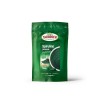
The label carries the rest. The spirulina powder 200 g we stock from KIKI Health is 100% organic spirulina in a 200 g tub, declaring per 100 g: 382 kcal, 66 g of protein, 20 g of carbohydrate with no sugars, 5 g of fibre and 2 g of salt. On those figures the powder is high in protein and a source of fibre. The pack also states that it suits vegetarians and vegans, carries no artificial colours and may contain naturally occurring sulphites.
What does spirulina taste like?
Earthy and grassy is the usual verdict, with a marine edge that some read as seaweed and a bitter or savoury finish underneath. Two powders from different producers rarely taste the same, because growing conditions, drying and milling all shift the profile.
How strong that spirulina taste turns out also depends on the glass. A flat spoonful in plain water gives you the flavour at full volume, while the same amount in a thick smoothie sits under the fruit. Blue spirulina is an extract rather than whole dried biomass, so it does not have to match the green powder note for note.
Powder, tablets or blue spirulina?
All three come from the same organism, and the difference you feel day to day is how you measure a serving and what happens to the colour. Blue spirulina is a phycocyanin-rich extract drawn from the same biomass, used mainly where a strong blue is the point.
Handling is where the formats part company:
- Powder: loose and flexible, it stirs into liquid or food, and you measure each serving yourself against the label.
- Tablets: pressed into fixed units, so the counting is already done and the number comes from that product's own label.
- Blue extract: a colour-led choice, and the most sensitive of the three to heat and light.
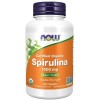
Both the loose and the pressed formats sit on the same shelf: Spirulina Powder 100 g and Organic Spirulina in Powder 200g on one side, Spirulina tablets 250mg, Spirulina 800mg and Spirulina 1000mg on the other. Deciding between them is easier once you know what else goes into the glass, and the superfoods category is the part of the shop to look through at that point.
How much spirulina do you take per portion?
For the 200 g KIKI Health powder the label sets the serving at two teaspoons, which it puts at 10 g, and lists 160 kJ / 38 kcal for that amount. The manufacturer's wording reads: „Adult intake should begin with two (2) teaspoons or more in a glass of water or juice. Can also be sprinkled on or mixed with food”.
That figure travels with the product, not with the ingredient. A teaspoon is not a unit of mass, and a heaped spoon of fine powder weighs differently from a level one. Spirulina tablets work the same way: the number per serving comes from that product's label, and it cannot be converted from a powder measure.
How do you mask the taste of spirulina?
Cold, thick and slightly sharp is the combination that works. A chilled smoothie base with banana, berries or apple carries the flavour far better than plain water, and the label allows sprinkling the powder on food as well as stirring it into a drink.
What you mix it into does the work:
- A cold, thick base: a dense chilled blend spreads the powder through the drink and shortens the time it sits on the tongue.
- Fruit acid: citrus and berries push hardest against the grassy note in a green powder.
- Food as well as drinks: stirring it into a dip, a dressing or porridge spreads the flavour across a whole portion.
Juice is the mixer the label itself names. Pick one from the healthy juices category before you open the tub. One caveat if colour matters: acid can shift a blue drink towards purple, so a citrus-heavy base changes the look even when the flavour lands well.
Storing spirulina so it keeps its colour
Cool, dry and out of direct sunlight is where a tub keeps best. The fridge is unnecessary, so keep the container closed between servings, away from the hob and the window, and the powder holds its colour and its smell far longer than it would on an open shelf in a warm kitchen.
Colour is the part that reacts first. Light and high temperatures weaken phycocyanin, and acidic mixtures can change the shade, so add the powder after heating when you want the blue to survive – the shade holds up better that way. The cupboard that suits it is the one you already use for the rest of the food supplements at home: dry, dark and steady in temperature.
Taking spirulina: what to remember
Everything practical comes off the pack: the serving, the mixing note and the storage line. Start with water or juice at the labelled serving. Orders placed before 2pm on a working day leave our warehouse the same day. Compare the powder with the pressed formats in our spirulina range and pick the one that fits the way you actually drink!
Frequently asked questions about spirulina
Is spirulina an algae?
No – it is classed as a cyanobacterium, and „blue-green algae” survives as a common name used in the food trade. On a pack that wording usually sits alongside the Latin Arthrospira platensis in the ingredient line.
What is blue spirulina made from?
It is made from the same dried spirulina, with the phycocyanin pigment drawn out so that only the blue fraction remains. Because it is an extract, the amount of colour per gram depends on the individual product.
How much spirulina powder is one portion?
The gram figure on your own pack is the binding one whenever a label gives both, because a spoon holds a different weight depending on how finely the powder is milled.
Can you add spirulina to hot drinks?
You can, though high temperatures dull phycocyanin, so a blue drink keeps its shade better when the powder goes in once the liquid has cooled a little. That is a colour question, not a safety one.
Why does spirulina smell strong?
The dried biomass carries grassy, roasted and marine notes that come through more clearly in the nose than on the tongue, and how pronounced they are differs between producers and batches.