 SAME DAY DISPATCH; ORDER BY 2PM
 SECURE PAYMENT
  4.8/5 RATING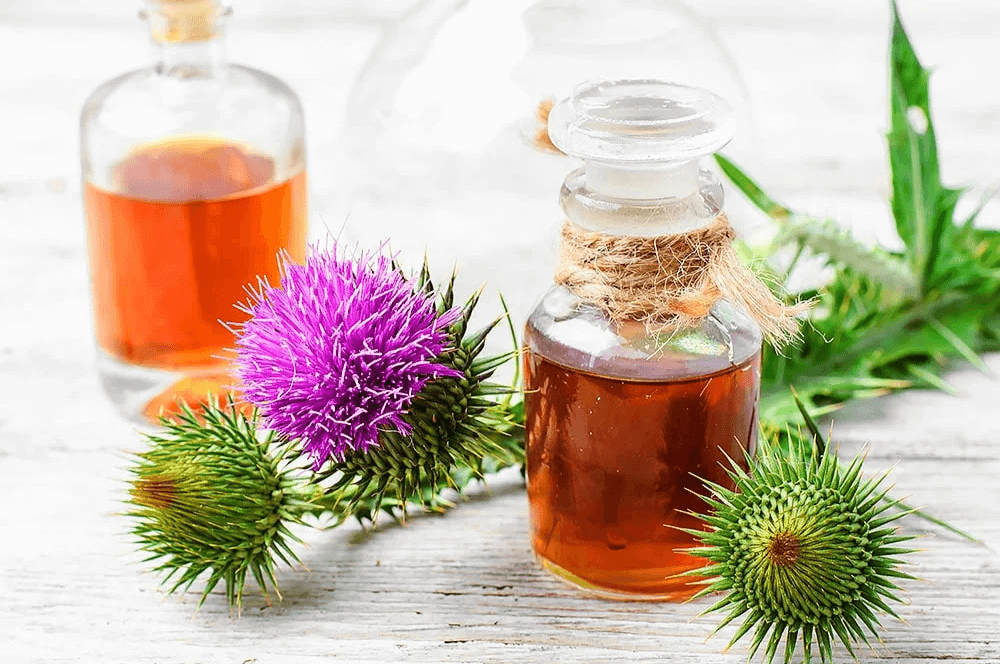
What is milk thistle good for?
Every pack starts with the same small, hard seed from a spiky plant with white-veined leaves. What happens next decides what you buy: pressed cold it becomes oil, extracted it becomes a standardised tablet, left whole it goes into an infusion or a bowl of porridge. Milk thistle reaches the kitchen in three different shapes, each with its own label. Trace the seed through all three and the right pack becomes an easy choice!
Milk thistle from seed to shelf:
- One plant, three forms: seeds, standardised tablets and cold-pressed oil all come from Silybum marianum.
- Silymarin is a label figure: it appears as a standardisation percentage of the extract, measured by two different laboratory methods.
- Seeds are an oily food: 26 g of fat and under 0.5 g of carbohydrate per 100 g.
- On our shelf: seeds and tablets sit in one category, the oil among the cold-pressed oils.
- The pack sets the portion: 10 g of seed, one or two tablets with food, or a single teaspoon of oil.
What is milk thistle?
Milk thistle is a European thistle, Silybum marianum, easy to recognise by the white veins marbling its leaves, and the part that ends up in a pack is the seed. The plant runs tall and prickly, with purple flower heads that dry into the seed heads gathered at the end of summer.
One seed does not mean one product. The milk thistle supplements category holds whole seeds and tablets, plus capsules in which the plant is one item on a longer ingredient list, while the oil pressed from the same seed is filed with the cold-pressed oils.
What is silymarin?
Silymarin is the complex of flavonoids naturally present in milk thistle seeds, and a pack declares it as a standardisation percentage of the extract. That percentage is what makes two products comparable, because a plain seed powder and a concentrated extract carry the same plant name and very different quantities.
The pack answers three separate questions, and they are easy to confuse:
- Standardisation and method: the Applied Nutrition tablets declare 80% silymarin [UV] and 40% [HPLC], two laboratory methods reading one extract, so a percentage without its method says little.
- Content per tablet: 300 mg of milk thistle seed extract, of which 174 mg is silymarin.
- Fruit equivalent: 7200–8100 mg of milk thistle fruits, the raw material behind one tablet, not the weight you swallow.
Whole seeds carry no such figure, because nothing in them has been concentrated.
How has milk thistle traditionally been used?
Milk thistle has been part of European plant growing for roughly two thousand years, first around the Mediterranean, where it still grows wild, and later in monastery gardens north of the Alps. It appears in Greek and Roman writing on plants, and it stayed in cultivation because the seed heads ripen reliably and dried seed keeps well.
That is a record of presence. Historical use tells you where a plant has been, not what it does, and older herb books read differently once the two are kept apart. What tradition does explain is the shelf: the seed was always the harvested part, so every present-day form is made from it.
Which form of milk thistle should you choose?
The form worth choosing is the one that fits how you already eat, because all three come from the same plant and differ mainly in how the portion is measured. Seeds ask for a little preparation, tablets take the measuring off your hands, and the oil works only in cold dishes. Our own selection runs wider than it looks, since two different cold-pressed milk thistle oils sit among the oils.
The table below sets the three forms against what their labels declare:
Milk thistle seeds – whole and ground
Whole seeds are the least processed form and the most flexible in the kitchen. The organic milk thistle seeds from Bio Planet carry one ingredient and nothing else, and fat makes up roughly a quarter of the seed, which is why they behave more like a nut than a grain in the kitchen. The same table puts protein at 16 g per 100 g, enough for the seed to count as a source of protein. Ready-ground seed comes and goes from the shelf, and the label settles that too, since the grain can be ground at home before use.
Milk thistle extract – tablets and capsules
Tablets suit anyone who would rather have the portion decided in advance. A pack of milk thistle tablets from Applied Nutrition holds 90 of them, made in the UK and marked vegan, gluten-free and Halal, so nothing needs weighing or timing. Capsules that combine milk thistle with other ingredients are a different proposition, because the plant is then only part of the formula.
Cold-pressed milk thistle oil
Oil is the form that ends up on a plate. Pressed at low temperature like the other cold-pressed oils, the 250 ml bottle of cold-pressed milk thistle oil from Olandia is unrefined and single-ingredient, which is why it goes into salads, smoothies and yoghurt and never near a hot pan. Sediment at the bottom is normal in an oil pressed this way, and the bottle keeps best somewhere cool and shaded.
How to take milk thistle?
Each form comes with its own directions, and they are not interchangeable. Seed is measured at 10 g with the scoop in the pack, covered with 250 ml of hot but not boiling water and left under a lid for 15 minutes before straining. Tablets are swallowed with food, and the oil is spooned onto something already cold. In every case the instructions on the pack come first.
How much milk thistle per day?
The answer sits on the pack you own, because each product declares its own daily intake. On the Applied Nutrition pack, one or two tablets a day work out at 174–348 mg of silymarin, since each tablet declares 174 mg. Bio Planet sets its daily intake at 10 g of seed and Olandia at a single 4 g teaspoon. Those are label readings, and a pharmacist is the right person to ask when other preparations are already in use.
When to take milk thistle – morning or night?
Morning and evening are equally workable, because the deciding factor is the shape of your own day. The three forms simply slot into different moments of it.
Practical timing comes from the pack and from your routine:
- Tablets: taken with food, so they follow whichever meal you are most likely to remember.
- Seed infusion: fifteen minutes under a lid and then straining, which is easier after work than before it.
- Oil: goes wherever a cold dish already sits, most often lunch.
The form you find easiest to keep up with is the one worth buying.
Milk thistle in your daily routine: where to start
Starting with one form is enough. Pick the one that matches how you already eat: a morning bowl of porridge points to seeds, a week with no spare minutes points to tablets, and a household that dresses its salads points to the oil. One pack, read properly, carries the portion, the method and the storage advice.
Whichever of the three you reach for first, you will find them side by side in our food supplements range at 4ecoshop!
Frequently Asked Questions about milk thistle
Can you take milk thistle with turmeric?
Milk thistle and turmeric are sold as two separate products, and nothing on either label stops both sitting in the same cupboard. Bringing several preparations together is a conversation for a pharmacist, and the portion on each label is worth checking first.
What does milk thistle taste like?
The oil is the most distinctive of the three, described on the pack as delicate and slightly herbal, with a subtle seed note. Whole seeds are hard and mild, closer to a nut than to a herb.
Can you sprinkle ground milk thistle seeds on food?
Sprinkling is exactly what the Bio Planet label suggests, listing porridge, muesli and salad as places the seed fits, and adding that the grain can be ground first. A coffee grinder does the job in seconds.
Is milk thistle suitable for vegans?
The Bio Planet seeds and the Applied Nutrition tablets both carry a vegan marking, so those two are suitable. Combined capsules and other brands vary, so the panel on the individual pack is the only reliable answer.
How should you store milk thistle seeds?
Dry, sealed and away from light is all the seed asks for, and a screw-top jar in a cupboard covers it. Ground seed is the exception, since a milled surface loses its aroma far quicker than a whole one, so the grinder is best used in small batches.