


 SAME DAY DISPATCH; ORDER BY 2PM
 SECURE PAYMENT
  4.8/5 RATING
- V
- GF
- O
* Gluten-free - ideal for allergy sufferers
* Plant-based source of energy
* Certified BIO product
- Bestseller
- V
- GF
* Gluten-free - ideal for allergy sufferers
* Plant-based source of energy
* Certified BIO product
- Bestseller
- V
- K
- GF
- O
* Rich in fiber.
* Aids digestion.
* Contains minerals such as potassium and magnesium.
- Bestseller
- V
- GF
* Gluten-free
* Universal
* Easy to prepare
- Bestseller
- V
- GF
* Neutral taste.
* Great for puddings.
* Supports a healthy diet.
- Bestseller
- V
- GF
* Gluten-free.
* Contains B vitamins.
* Perfect for baking.
- Out-of-Stock
- V
- GF
- O
- Gluten-free product
- Vegan
Gluten-Free Flour for Baking and Cooking
In our gluten-free flour range you'll find single flours milled from oats, millet, chestnuts, acorns, almonds and amaranth, a tapioca starch for binding and a ready-made universal mix for anyone starting out. Most of them behave nothing like wheat on their own, so the real choice here is between buying a blend and building one. See which flour does which job before you fill your basket!
Gluten-free flour blends and single flours
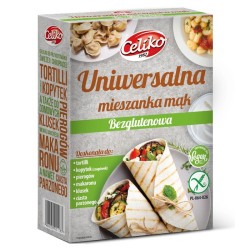
A single gluten-free flour rarely carries a bake on its own. Without gluten there is nothing holding the crumb together, so a loaf made from one flour tends to crumble. Almost every good result comes from a combination instead: a neutral base, a flour that brings flavour and fat, and a starch that binds. A ready blend does that balancing for you, which is what the Gluten-Free Universal Flour Mix 200g from Celiko is for.
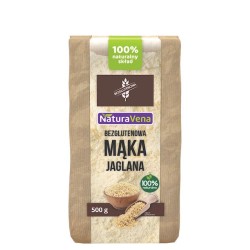
Single flours give you control over each of those roles instead. Millet flour is the mildest base we stock: the Gluten-Free Millet Flour 500g from NaturaVena has a soft, faintly buttery flavour and a fine texture.
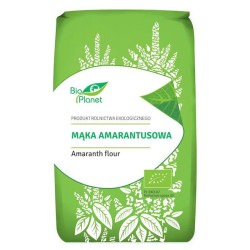
Organic Amaranth Flour 400g from Bio Planet is earthier and more assertive, so it works better as part of a base than as all of it. Both grains are naturally free from gluten, though only a certified pack tells you the batch has been tested for contamination.
Building your own gluten-free flour blend
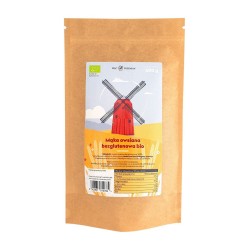
Start with the base, which should be the largest share and the mildest in taste – the Gluten-Free Oat Flour 500g gives a softer crumb. Then add the flour that carries flavour and fat, usually almond or chestnut, in a smaller proportion, because too much fat keeps the middle damp. Finish with a starch, the smallest part of the blend, to bind everything and give the crumb some spring.
Oats deserve one extra note: they pick up gluten easily in the supply chain, so buy a version labelled and certified gluten-free.
Nut and seed flours: almond, chestnut and acorn
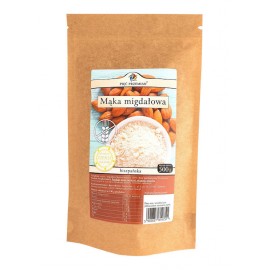
Nut and seed flours are where the flavour comes from. Almond flour is the richest of them: the Gluten Free Spanish Almond Flour 500g is finely ground and high in fat, which keeps cakes moist for days. Use it for up to about a third of a blend, since a heavier hand stops the bake setting properly.
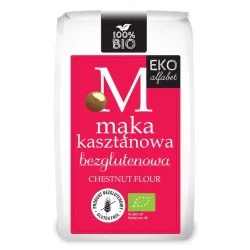
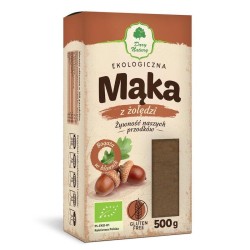
Chestnut flour is sweet and faintly smoky, and needs almost no added sugar to read as dessert; we stock 250g packs from Bio Planet and Eko Alfabet. Acorn flour is the most unusual thing on the shelf – the Gluten-Free Acorn Flour 500g from Dary Natury is tannic, dark in colour and best used as an accent rather than a base. If you are stocking a whole gluten-free kitchen, our gluten-free pasta covers the savoury half of the week.
Starches and binders in gluten-free baking
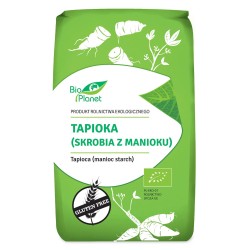
Starch is the part most home bakers leave out, and it is usually why the crumb turns out dense. Tapioca flour is almost pure starch: it gelatinises when heated, holds moisture and gives dough some of the stretch that gluten normally provides. The Gluten-Free Tapioca (Manioc Starch) 400g from Bio Planet goes into a blend, and the same pack thickens sauces and fruit fillings without clouding them.
Starch binds, but it does not build structure, so bakers working with wetter doughs often add a fibre-based binder as well – husks and fibre powders from our fibre supplements range do that job. Read the directions on the pack before you scale it up.
Storing gluten-free flour without cross-contamination
Storage here is a safety question, not only a freshness one. Flour dust travels, and a wheat-dusted sieve or a shared scoop will undo a certified pack in seconds. Keep gluten-free flours in sealed containers of their own, on a shelf above the wheat, with a separate sieve, whisk and rolling pin. Keep the original label with the pack, because that is where the certification and the batch date live.
Nut flours need a little more attention than the rest: their fat content means they turn rancid faster, so almond, chestnut and acorn keep best somewhere cool and dark. If breakfast is the next thing on your list, our gluten-free cereal shelf is a deliberately narrow one – three lines, picked so that a gluten-free household does not have to read every box on the page.